


DR exports US$205 million in organic products
 Diario Libre







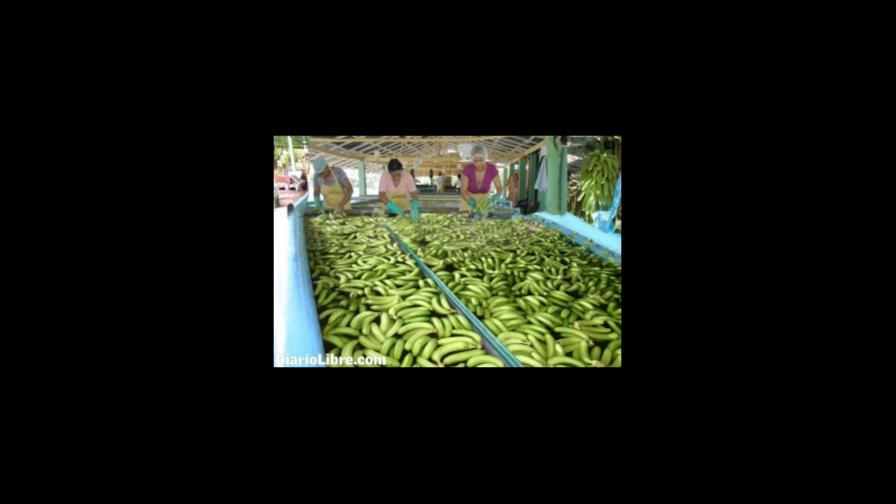
SANTO DOMINGO. Organic Dominican products are each day earning more space on the international markets. Organic bananas, avocados and eggplant are highly ranked in local exports, alongside coffee and cacao.
According to numbers from the Center for Investment and Exports (CEI-RD), the export of some 19 organic products, which does not include either coffee or cacao, produced US$101.1 million last year.
On a general level, the export of organic products went over the US$205 million level in 2011, including coffee and cacao, a number which was a little more than in 2010, when US$200 million was exported.
In the last five years organic farming has gone from exporting US$74 million in 2006 to US$200 million in 2010, in which just coffee and cacao represent more than 50%.
Among the 19 products mentioned by the CIE-RD which brought in more than US$100 million are organic bananas, with US$85.3 million in exports; avocados, with US$9,7 million; peppers with US$1.9 million, followed by fresh pineapple, mangoes, limes, tomatoes, cucumber, plantains, oranges, grapefruit and aloe.
Crops
According to official numbers, the country has 2.3 million "tareas" (a local land measure = 629m2) dedicated to organic agriculture and more than 23,206 farmers make their living in this way.
The Dominican Republic is one of the largest producers of organic bananas in the world, as well as cacao, coffee, mangoes, and other crops, for which it has earned certification as one of the largest producers of organic crops.
The 23,206 organic farmers are assisted by 183 operators and 63 commercial ventures which supply them with their different items for producing the organic crops. The producer stress that organic agriculture has undergone a sharp increase with the support that it has received from the government.
Exports of organic avocados go to markets in the United States, Puerto Rico, the Netherlands, the United Kingdom, the Dutch Antilles, France, Spain, Germany, Italy, the Virgin Islands, Switzerland, Jamaica, and Martinique.
The Dominican Republic has become one of the principle producer and exporter nations of organic crops, according to the certifications from international agencies such as the Office for the Control of Organic Agriculture (OCAO), which has offered 67 courses to operators.
Productive areas
The main areas for the production of organic crops are the Central Cibao (where vegetables are the major crops); the Northwest and the South. The greatest amount of land is dedicated to the organic production of cacao, banana, mangoes, coffee, coconuts, avocados, vegetables, limes, yucca, and oranges. The area dedicated to organic cacao is 108,989.15 hectares, of bananas 18,373, of coffee 11,359.47, of coconuts 3,120.12, mangoes 1,052.77, limes 191.73, yucca 250.1, avocados 56.3 hectares, according to data from the Ministry of Agriculture.
According to numbers from the Center for Investment and Exports (CEI-RD), the export of some 19 organic products, which does not include either coffee or cacao, produced US$101.1 million last year.
On a general level, the export of organic products went over the US$205 million level in 2011, including coffee and cacao, a number which was a little more than in 2010, when US$200 million was exported.
In the last five years organic farming has gone from exporting US$74 million in 2006 to US$200 million in 2010, in which just coffee and cacao represent more than 50%.
Among the 19 products mentioned by the CIE-RD which brought in more than US$100 million are organic bananas, with US$85.3 million in exports; avocados, with US$9,7 million; peppers with US$1.9 million, followed by fresh pineapple, mangoes, limes, tomatoes, cucumber, plantains, oranges, grapefruit and aloe.
Crops
According to official numbers, the country has 2.3 million "tareas" (a local land measure = 629m2) dedicated to organic agriculture and more than 23,206 farmers make their living in this way.
The Dominican Republic is one of the largest producers of organic bananas in the world, as well as cacao, coffee, mangoes, and other crops, for which it has earned certification as one of the largest producers of organic crops.
The 23,206 organic farmers are assisted by 183 operators and 63 commercial ventures which supply them with their different items for producing the organic crops. The producer stress that organic agriculture has undergone a sharp increase with the support that it has received from the government.
Exports of organic avocados go to markets in the United States, Puerto Rico, the Netherlands, the United Kingdom, the Dutch Antilles, France, Spain, Germany, Italy, the Virgin Islands, Switzerland, Jamaica, and Martinique.
The Dominican Republic has become one of the principle producer and exporter nations of organic crops, according to the certifications from international agencies such as the Office for the Control of Organic Agriculture (OCAO), which has offered 67 courses to operators.
Productive areas
The main areas for the production of organic crops are the Central Cibao (where vegetables are the major crops); the Northwest and the South. The greatest amount of land is dedicated to the organic production of cacao, banana, mangoes, coffee, coconuts, avocados, vegetables, limes, yucca, and oranges. The area dedicated to organic cacao is 108,989.15 hectares, of bananas 18,373, of coffee 11,359.47, of coconuts 3,120.12, mangoes 1,052.77, limes 191.73, yucca 250.1, avocados 56.3 hectares, according to data from the Ministry of Agriculture.
 Diario Libre

 Continuar con Google