


Remittances from Vicente Noble to Spain on increase
Numbers from Vimenca show 57% increase over 5 years
 Diario Libre







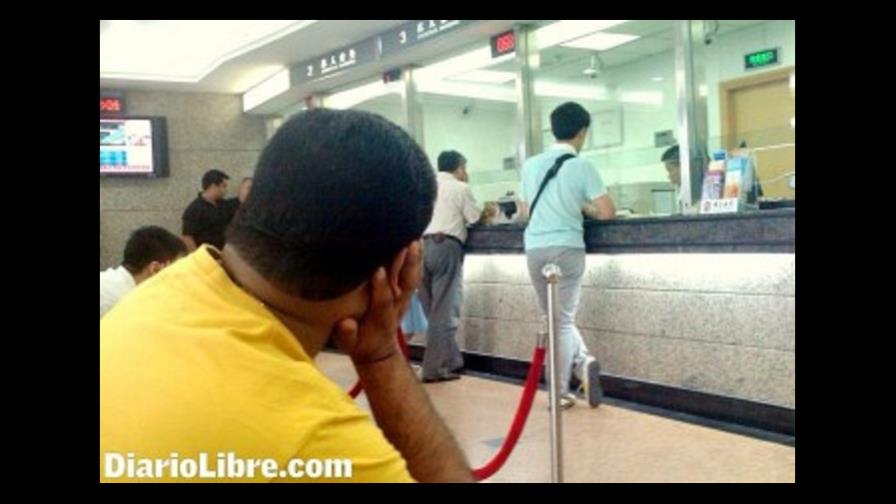
VICENTE NOBLE. The economic crisis that affects Spain has not only put the amount of remittances that reach the town of Vicente Noble "in the red," but it has forced may persons that previously waited for their "pennies" to have to "scratch together" money in order to support their relatives that await the fund in the "Motherland."
Juana (not her real name in order to protect her dignity) barely has a tumble-down shack in which to live and within her problems she collects what she can to send to her son in Spain.
"This woman came here to ask for some help in order to bring her son home and I did not dare to tell her about the conditions in which he is living there," commented one of her neighbors who just returned from Spain.
According to what one of Juana's neighbors told Diario Libre, the young man wanders the streets of Madrid and sleeps under bridges, Like Juana's son, each day there are more cases of persons that are sending money to their relatives in Spain, the same persons that some time ago were the providers for their families here.
According to the data from the remittance company Vimenca, the tendency of remittances from the town of Vicente Noble towards Spain has been going up over the past five years, with a 57.2% increase.
In 2007, Vimenca handled 134 operations of remittances from the southern town towards Spain and the number increased to 184 in 2008; 203 in 2009; 214 in 2010, and 234 in 2011. This was the reverse of what happened with transactions of money that arrived from Spain to Vicente Noble over the same period. The number of remittances from Spain was 855 in 2007 and it went to 986 in 2008; nevertheless it fell to 961 in 2009 and 934 in 2010 until it recovered a little bit last year when it reached 962 transactions. Just in 2011, Vimenca handled 2,507,100 transactions of which 137,000 were from Spain.
Less resources
Fredevinda Ramirez is 73 years old. Her subsistence, which depends on his children, has been reduced lately. Of six children, three live with her in Vicente Noble and three others live in Palma de Mallorca, Spain. Of the ones that live overseas, only one has a job. "She sends me less now, because before they gave me five or seven (thousand pesos) but now it is three or two," she says.
The woman comments that, it has gone so far that one of her daughters bought a lot two years ago to build a house, but due to the lack of work, she still has not been able to put up one cement block.
In Vicente Noble, the remittances constitute the principle source of income of most families, after the migration of thousands of their neighbors in the 90s put farming into second place.
For nearly two decades the official numbers shows a continued increase in the amount of hard currency that arrived in the Dominican Republic from Europe, specifically Spain and Italy, which provided 30% of the national total, according to numbers from the Central Bank. The remaining 70% came from the United States.
According to the data from the state entity, the country received a total of US$3.2 billion dollars from remittances in 2011, a number that while it represents a 7% increase over 2010 and a 6% increase over 2009, is still below the amounts that entered in 2008 and 2007, when the effects of the crisis were still not so devastating for the Dominican immigrants.
According to Frank Fuentes, the director of the International Department of the Central Bank, there are no calculation of the amount of money that is sent from here to overseas.
Juana (not her real name in order to protect her dignity) barely has a tumble-down shack in which to live and within her problems she collects what she can to send to her son in Spain.
"This woman came here to ask for some help in order to bring her son home and I did not dare to tell her about the conditions in which he is living there," commented one of her neighbors who just returned from Spain.
According to what one of Juana's neighbors told Diario Libre, the young man wanders the streets of Madrid and sleeps under bridges, Like Juana's son, each day there are more cases of persons that are sending money to their relatives in Spain, the same persons that some time ago were the providers for their families here.
According to the data from the remittance company Vimenca, the tendency of remittances from the town of Vicente Noble towards Spain has been going up over the past five years, with a 57.2% increase.
In 2007, Vimenca handled 134 operations of remittances from the southern town towards Spain and the number increased to 184 in 2008; 203 in 2009; 214 in 2010, and 234 in 2011. This was the reverse of what happened with transactions of money that arrived from Spain to Vicente Noble over the same period. The number of remittances from Spain was 855 in 2007 and it went to 986 in 2008; nevertheless it fell to 961 in 2009 and 934 in 2010 until it recovered a little bit last year when it reached 962 transactions. Just in 2011, Vimenca handled 2,507,100 transactions of which 137,000 were from Spain.
Less resources
Fredevinda Ramirez is 73 years old. Her subsistence, which depends on his children, has been reduced lately. Of six children, three live with her in Vicente Noble and three others live in Palma de Mallorca, Spain. Of the ones that live overseas, only one has a job. "She sends me less now, because before they gave me five or seven (thousand pesos) but now it is three or two," she says.
The woman comments that, it has gone so far that one of her daughters bought a lot two years ago to build a house, but due to the lack of work, she still has not been able to put up one cement block.
In Vicente Noble, the remittances constitute the principle source of income of most families, after the migration of thousands of their neighbors in the 90s put farming into second place.
For nearly two decades the official numbers shows a continued increase in the amount of hard currency that arrived in the Dominican Republic from Europe, specifically Spain and Italy, which provided 30% of the national total, according to numbers from the Central Bank. The remaining 70% came from the United States.
According to the data from the state entity, the country received a total of US$3.2 billion dollars from remittances in 2011, a number that while it represents a 7% increase over 2010 and a 6% increase over 2009, is still below the amounts that entered in 2008 and 2007, when the effects of the crisis were still not so devastating for the Dominican immigrants.
According to Frank Fuentes, the director of the International Department of the Central Bank, there are no calculation of the amount of money that is sent from here to overseas.
 Diario Libre

 Continuar con Google