


Producers call for Haiti to lift ban of Dominican products
In spite of informal sales of eggs, poultry and salami on the frontier, losses are millions
 Diario Libre







SD. Local producers are calling for the Dominican and Haitian governments to reach an understanding in order to lift the ban which the neighboring country has imposed since the beginning of 2008 on the entry of local poultry products and the recent prohibition of salami exports, a situation with is causing millions in losses.
Exports of salami from the Dominican Republic to Haiti have dropped by 90% after the National Institute for the Protection of Consumer Rights (ProConsumidor) reported the low quality of the processed meat product.
Although the Haitian government officially prohibited the import of salami last 27 July, a small portion of the product is sold to Haitians in the frontier markets.
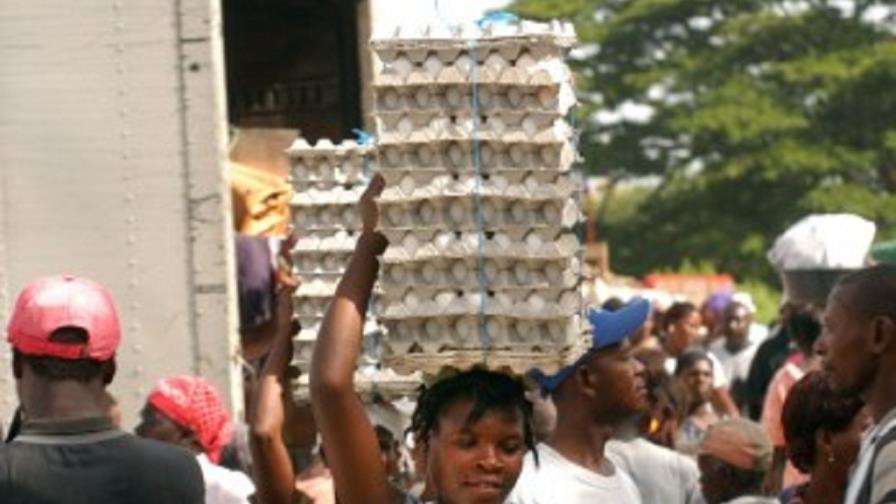
The same thing occurs with the sale of eggs and poultry which are sold informally, especially in the bi-national market in Dajabon, according to statements from the president of the National Association of Egg Producers, Manuel Escaño.
He quantified the yearly production at 360 million and half of them stay in the Dominican Republic, producing an undervaluation of the product.
Jose Lopez, the president of the Meat Processors of the Cibao, said that the export of salami to the neighboring country went down from 7,000,000 pounds to 1,000,000 pounds a month. "Before the report from ProConsumidor, we sold the Haitians between six and seven million dollars a month, but this number has fallen to less than a million dollars in the informal market," he revealed.
Lopez said that Haitian businessmen that carry out sales of different kinds of meat in the neighboring country have maintained a boycott of salami, sausages and other products.
After a tour of the factories, they stressed the quality of the manufacturing process and said that they would carry their impressions to the Haitian government.
Poultry and eggs
As a result of the appearance of the bird flu in the eastern part of the country, the exports of chickens to Haiti also crashed. The government of the neighboring country has kept the suspension of the imports of this bird and eggs from the Dominican Republic, in spite of the fact that the country achieved an international certification.
From the Dominican Republic there is an average of 700,000 chickens a month exported to Haiti, equal to some US$600,000, while 20,000,000 are sold to Haitians each month for a value of approximately RD$60,000,000.
Just the egg producers of Espaillat province lost between RD$30,000,000 and RD$40,000,000 after the Minister of Agriculture of Haiti prohibited the import of the product.
Consulted regarding this situation, the president of the Dominican Agri-business Board, Osmar Benitez, said that in a recent meeting with the Dominican Minister of Agriculture they talked informally about the issue.
He said that the institution that he represents will work towards the eventual end to the prohibitions.
Exports of salami from the Dominican Republic to Haiti have dropped by 90% after the National Institute for the Protection of Consumer Rights (ProConsumidor) reported the low quality of the processed meat product.
Although the Haitian government officially prohibited the import of salami last 27 July, a small portion of the product is sold to Haitians in the frontier markets.
The same thing occurs with the sale of eggs and poultry which are sold informally, especially in the bi-national market in Dajabon, according to statements from the president of the National Association of Egg Producers, Manuel Escaño.
He quantified the yearly production at 360 million and half of them stay in the Dominican Republic, producing an undervaluation of the product.
Jose Lopez, the president of the Meat Processors of the Cibao, said that the export of salami to the neighboring country went down from 7,000,000 pounds to 1,000,000 pounds a month. "Before the report from ProConsumidor, we sold the Haitians between six and seven million dollars a month, but this number has fallen to less than a million dollars in the informal market," he revealed.
Lopez said that Haitian businessmen that carry out sales of different kinds of meat in the neighboring country have maintained a boycott of salami, sausages and other products.
After a tour of the factories, they stressed the quality of the manufacturing process and said that they would carry their impressions to the Haitian government.
Poultry and eggs
As a result of the appearance of the bird flu in the eastern part of the country, the exports of chickens to Haiti also crashed. The government of the neighboring country has kept the suspension of the imports of this bird and eggs from the Dominican Republic, in spite of the fact that the country achieved an international certification.
From the Dominican Republic there is an average of 700,000 chickens a month exported to Haiti, equal to some US$600,000, while 20,000,000 are sold to Haitians each month for a value of approximately RD$60,000,000.
Just the egg producers of Espaillat province lost between RD$30,000,000 and RD$40,000,000 after the Minister of Agriculture of Haiti prohibited the import of the product.
Consulted regarding this situation, the president of the Dominican Agri-business Board, Osmar Benitez, said that in a recent meeting with the Dominican Minister of Agriculture they talked informally about the issue.
He said that the institution that he represents will work towards the eventual end to the prohibitions.
 Diario Libre

 Continuar con Google