


Congress prepares for the Review Assembly tomorrow
Deputies of the opposition PRM say they will attend the session
 Tania Molina







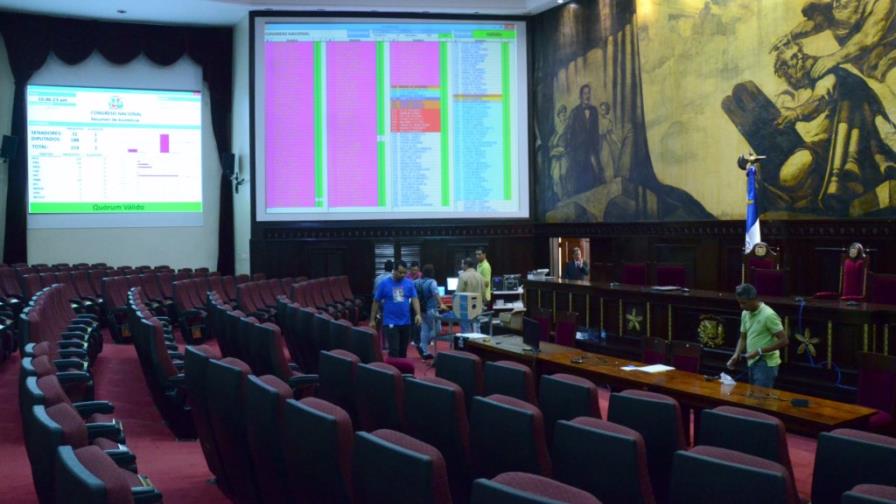
SANTO DOMINGO. Technicians from the Congress worked yesterday on the preparation of the National Assembly Hall where tomorrow, Saturday, the legislators meet in the National Review Assembly in order to deal with the modification of the Constitution in its article 124, referring to presidential reelection.
Engineering and IT personnel were finishing the details in the placement of the sound equipment, the screens and the automatic controls that the assembly members will use to record their votes. In the afternoon, the personnel charged with the logistics held a rehearsal to prove that everything was in order.
The session is set for 10:00 in the morning according to the invitation which circulated yesterday, just as had been announced last Tuesday when, after the Chamber of Deputies approved the law that declared the necessity to reform the Constitution. This law was enacted the same day by the Executive Power with the Num. 24 - 15.
"By virtue of what is established by articles 270 of the Constitution and 41 of the Regulations for the Functioning of the National Assembly and the Joint Meetings of the chambers, the Honorable members of the assembly are invited to the meeting of the National Review Assembly which will be held Saturday, 6 June 2015, at 10:00 in the morning, with the intention of beginning the work to modify the Constitution of the Republic," says the announcement signed by the president of the Senate and of the National Assembly, Cristina Lizardo.
The Senator, who has the privilege of being the first woman to preside over the Assembly, faces her first session that is not formal and laid out by protocol, or is the presentation of accounts in that position. As a result she will have to handle the debates between those who are in favor of the modification in order to ease the re-nomination of President Danilo Medina and those who are against this.
The members of the assembly total 222, with 32 Senators and 190 deputies. Of these the government's Dominican Liberation Party (PLD), the promoter of the modification, has 30 Senators and 95 deputies for a total of 125 legislators. In addition it has in their favor, thanks to agreements that have been reached, the votes of the two Senators of the Social Christian Reformist Party (PRSC), the 42 deputies of the Dominican Revolutionary Party (PRD), the nine deputies of the PRSC, plus another three from the BIS, the PPC and the MODA parties, will contribute one each. If the assembly continues with the voting tendency which occurred in both chambers in order to pass the legislative proposal, the PLD will have 181 votes in favor of the reelection.
Against this position will be the deputies of the Modern Revolutionary Party (PRM), which total 36, although two of them are in the process of being expelled from the party because they voted in favor of the law to convene the assembly. Yesterday the spokesman for the bloc of deputies of the PRM, Nelson Arroyo, reported to the Diario Libre that all the legislators would be present at the Assembly tomorrow.
Also opposing the modification are the MIUCA, the ADP, the FNP, the independent deputy Minou Tavarez Mirabal and they can add Deputy Victor Sanchez, who voted no to the con vocation and resigned from the PLD, upset over the reelection.
According to article 271 of the Constitution, in order to carry the reform, the National Review Assembly will meet with the presence of more than half of the members of the two Chambers and their decisions will be taken by the two thirds majority of votes. With a total of 222 members in the Assembly, the two thirds parts equals 148.
This will be modification Num. 39
The Dominican Constitution dates from 6 November 1844. In the 171 years of life it has been modified on 38 occasions, and if tomorrow the proposed changes are approved, they will total 39. The first reform occurred on 23 February 1854 and the last on 26 January 2010.
In the majority of these modifications the element of reelection was present. In 1963 it was eliminated, but in 1966 Joaquin Balaguer revived it. The presidential re-nomination was also the protagonist in the constitutional reforms of 1994 and 2002, in the first case in order to prohibit it and, in the second, in order to permit it.
In the reform of 2010, reelection was also decisive at the hour of approving the proposal, since the Dominican Revolutionary Party (PRD) conditioned its support that it be eliminated.
The president of that organization, Miguel Vargas Maldonado, cited the prohibition of this figure as the greatest contribution of the PRD to that reform. The elimination was agreed upon in the so-called "pact of the blue ties," which Vargas and former President Leonel Fernandez signed.
Regarding modifications, the Dominican Constitution has the advantage over that of the United States, although the U.S. Constitution is 35 years older. The United States Constitution has been amended 27 times.
Engineering and IT personnel were finishing the details in the placement of the sound equipment, the screens and the automatic controls that the assembly members will use to record their votes. In the afternoon, the personnel charged with the logistics held a rehearsal to prove that everything was in order.
The session is set for 10:00 in the morning according to the invitation which circulated yesterday, just as had been announced last Tuesday when, after the Chamber of Deputies approved the law that declared the necessity to reform the Constitution. This law was enacted the same day by the Executive Power with the Num. 24 - 15.
"By virtue of what is established by articles 270 of the Constitution and 41 of the Regulations for the Functioning of the National Assembly and the Joint Meetings of the chambers, the Honorable members of the assembly are invited to the meeting of the National Review Assembly which will be held Saturday, 6 June 2015, at 10:00 in the morning, with the intention of beginning the work to modify the Constitution of the Republic," says the announcement signed by the president of the Senate and of the National Assembly, Cristina Lizardo.
The Senator, who has the privilege of being the first woman to preside over the Assembly, faces her first session that is not formal and laid out by protocol, or is the presentation of accounts in that position. As a result she will have to handle the debates between those who are in favor of the modification in order to ease the re-nomination of President Danilo Medina and those who are against this.
The members of the assembly total 222, with 32 Senators and 190 deputies. Of these the government's Dominican Liberation Party (PLD), the promoter of the modification, has 30 Senators and 95 deputies for a total of 125 legislators. In addition it has in their favor, thanks to agreements that have been reached, the votes of the two Senators of the Social Christian Reformist Party (PRSC), the 42 deputies of the Dominican Revolutionary Party (PRD), the nine deputies of the PRSC, plus another three from the BIS, the PPC and the MODA parties, will contribute one each. If the assembly continues with the voting tendency which occurred in both chambers in order to pass the legislative proposal, the PLD will have 181 votes in favor of the reelection.
Against this position will be the deputies of the Modern Revolutionary Party (PRM), which total 36, although two of them are in the process of being expelled from the party because they voted in favor of the law to convene the assembly. Yesterday the spokesman for the bloc of deputies of the PRM, Nelson Arroyo, reported to the Diario Libre that all the legislators would be present at the Assembly tomorrow.
Also opposing the modification are the MIUCA, the ADP, the FNP, the independent deputy Minou Tavarez Mirabal and they can add Deputy Victor Sanchez, who voted no to the con vocation and resigned from the PLD, upset over the reelection.
According to article 271 of the Constitution, in order to carry the reform, the National Review Assembly will meet with the presence of more than half of the members of the two Chambers and their decisions will be taken by the two thirds majority of votes. With a total of 222 members in the Assembly, the two thirds parts equals 148.
This will be modification Num. 39
The Dominican Constitution dates from 6 November 1844. In the 171 years of life it has been modified on 38 occasions, and if tomorrow the proposed changes are approved, they will total 39. The first reform occurred on 23 February 1854 and the last on 26 January 2010.
In the majority of these modifications the element of reelection was present. In 1963 it was eliminated, but in 1966 Joaquin Balaguer revived it. The presidential re-nomination was also the protagonist in the constitutional reforms of 1994 and 2002, in the first case in order to prohibit it and, in the second, in order to permit it.
In the reform of 2010, reelection was also decisive at the hour of approving the proposal, since the Dominican Revolutionary Party (PRD) conditioned its support that it be eliminated.
The president of that organization, Miguel Vargas Maldonado, cited the prohibition of this figure as the greatest contribution of the PRD to that reform. The elimination was agreed upon in the so-called "pact of the blue ties," which Vargas and former President Leonel Fernandez signed.
Regarding modifications, the Dominican Constitution has the advantage over that of the United States, although the U.S. Constitution is 35 years older. The United States Constitution has been amended 27 times.
 Tania Molina

 Continuar con Google