


Dominican scrap is sold in 44 countries
 Diario Libre







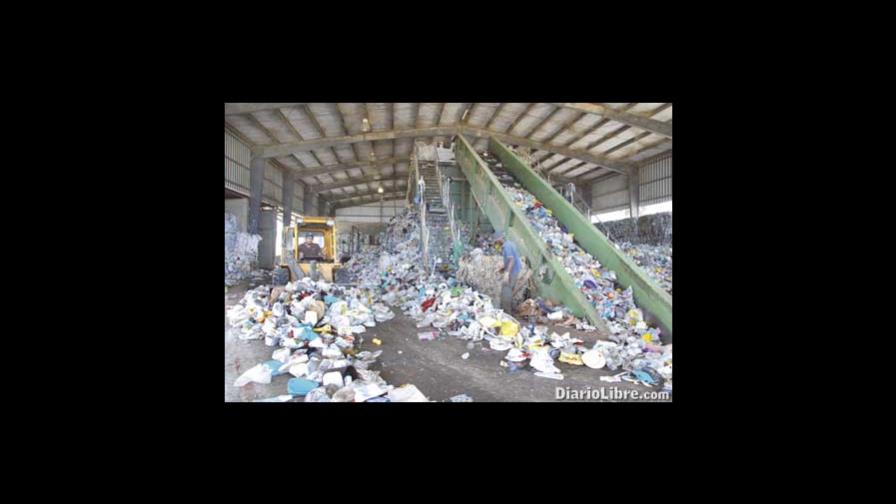
Six months ago, Junior Ramirez worked assembling rebar on construction sites. After being laid off, he decided to continue to be connected to metals, but in a different way. Now, from a beat up, old vehicle, he buys old metal things in sectors such as Los Mina, 12 of Haina, and Herrera that he later sells to retailers in Villa Consuelo. Although there is a lot of competition, Ramirez says that he earns enough to eat.
Attracted by a business that provides money on a daily basis, the ability to manage time as one pleases and moreover with a steady market, hundreds of Dominicans have entered into the buying and selling of scrap, mostly metals, plastics, paper, cardboard and glass.
Roberto Antonio Quezada, who makes a living selling cardboard, gives an idea of the expansion the business has undergone over the last few years. "When I arrived here (the dump at El Caliche in Cristo Rey), there were just two or three of us, now there is like twenty and more come each day", he says.
The efforts that this chain goes through each day in search of refuse are reflected at the end of the year in the statistics of the Center of Exports and Investments of the Dominican Republic (CEI-RD). According to the report provided to Diario Libre, last year the country sold scrap to 44 countries, with the major recipients being Taiwan, China, Vietnam, Korea, United States, Malaysia, Thailand, India and Puerto Rico.
The country received hard currency for a total of US$136,945,964.66, some US$50 million more than the year before. This was due to a growth in exports of scrap which went w\from 326,018,873 kg. in 2009 to 350,666,235 kg. in 2010.
One of the segments that increased the most was that of plastics which from 7,881,509 kg. went to 14,352,490 kg, an increase of nearly 100%. Glass also increased, from 1,896,627 kg. it reached 3,451,883 kg. and iron and steel went from 226,486,237 kg. to 244,855,210 kg. At the same time, exports of copper descended after the General Directorate of Customs prohibited its export. The export of scrap in 2010 represented 2% of the total exports, which were UD$6.598 billion.
This year it is expected that the exports, especially plastics, continue to grow, since the end of last year the Recicladora de Plasticos Dominicana (Repdsa), which extracts more than 1% of the scrap that is deposited in Duquesa, the largest dump in the country. Moreover, several companies have begun projects for recycling plastics, mainly in the schools, so that it is expected that an important amount of PET material (plastic bottles) will be reused before ending up in the environment.
It is not garbage
According to Gabriel Padilla, the manager of Repdsa, every day they receive 100,000 to 200,000 pounds of plastics, paper and cardboard that the "divers" recover from the garbage that arrives at the dump.
The purchase of all the material means the expenditure, every day, of some RD$300,000. "Therefore, for us there is no garbage, for us it is material, it is a business", said Padilla. Each week, since its installation they have been dispatching between 20 and 25 containers to foreign lands.
The business of the future?
Many international analysts feel that ?garbage' is the business of the future. Antonio Jimenez, the general supervisor for Metales Antillanos, an exporter of scrap iron and steel with more than 50 years in the market, agrees with that idea. He bases this on the fact that "the world is recycling", because of the depletion of non-renewable natural resources, the scarcity of raw materials, mostly in Asia, and the worry over climate change.
For Jimenez the business of recycling is at a high level, and it projects to keep growing. And it is like he says, "now nobody throws anything away". He refers to the fact that before builders paid to have pieces of rebar removed from building sites, but now they sell it to the metal companies.
Benefits
Although they say that "it takes a lot of work", those who dedicate themselves to the buying and selling of scrap say that the business leaves a profit. "If you invest fifty thousand you can earn a hundred and fifty (thousand)", explains Victor Angeles, owner of a scrap yard on the Los Casabes highway, next to the Duquesa dump. On occasions the earnings are handsome, since no investment is needed to buy the materials or to sell them, because the buyers go to the scrap yards.
Prices
The scrap is bought and sold by kilograms. The prices vary depending on the quality of the product and in the case of metals, on the international market. The most expensive, of course, are the metals. A buyer can buy a kilo of iron for RD$4.00 to RD$7.00 and sell it to a retailer for RD$10.00. At exporters like Metales Antillanos, the metric ton (1000 kilograms) can cost RD$11,000. However, plastics and papers have less value. Repdsa buys hard plastics at between RD$2.70 and RD$3.00 a kilo at the Duquesa dump. The price of paper is RD$2.70 a kilo, the same as cardboard, but it can go up depending on the quality of the product.
Attracted by a business that provides money on a daily basis, the ability to manage time as one pleases and moreover with a steady market, hundreds of Dominicans have entered into the buying and selling of scrap, mostly metals, plastics, paper, cardboard and glass.
Roberto Antonio Quezada, who makes a living selling cardboard, gives an idea of the expansion the business has undergone over the last few years. "When I arrived here (the dump at El Caliche in Cristo Rey), there were just two or three of us, now there is like twenty and more come each day", he says.
The efforts that this chain goes through each day in search of refuse are reflected at the end of the year in the statistics of the Center of Exports and Investments of the Dominican Republic (CEI-RD). According to the report provided to Diario Libre, last year the country sold scrap to 44 countries, with the major recipients being Taiwan, China, Vietnam, Korea, United States, Malaysia, Thailand, India and Puerto Rico.
The country received hard currency for a total of US$136,945,964.66, some US$50 million more than the year before. This was due to a growth in exports of scrap which went w\from 326,018,873 kg. in 2009 to 350,666,235 kg. in 2010.
One of the segments that increased the most was that of plastics which from 7,881,509 kg. went to 14,352,490 kg, an increase of nearly 100%. Glass also increased, from 1,896,627 kg. it reached 3,451,883 kg. and iron and steel went from 226,486,237 kg. to 244,855,210 kg. At the same time, exports of copper descended after the General Directorate of Customs prohibited its export. The export of scrap in 2010 represented 2% of the total exports, which were UD$6.598 billion.
This year it is expected that the exports, especially plastics, continue to grow, since the end of last year the Recicladora de Plasticos Dominicana (Repdsa), which extracts more than 1% of the scrap that is deposited in Duquesa, the largest dump in the country. Moreover, several companies have begun projects for recycling plastics, mainly in the schools, so that it is expected that an important amount of PET material (plastic bottles) will be reused before ending up in the environment.
It is not garbage
According to Gabriel Padilla, the manager of Repdsa, every day they receive 100,000 to 200,000 pounds of plastics, paper and cardboard that the "divers" recover from the garbage that arrives at the dump.
The purchase of all the material means the expenditure, every day, of some RD$300,000. "Therefore, for us there is no garbage, for us it is material, it is a business", said Padilla. Each week, since its installation they have been dispatching between 20 and 25 containers to foreign lands.
The business of the future?
Many international analysts feel that ?garbage' is the business of the future. Antonio Jimenez, the general supervisor for Metales Antillanos, an exporter of scrap iron and steel with more than 50 years in the market, agrees with that idea. He bases this on the fact that "the world is recycling", because of the depletion of non-renewable natural resources, the scarcity of raw materials, mostly in Asia, and the worry over climate change.
For Jimenez the business of recycling is at a high level, and it projects to keep growing. And it is like he says, "now nobody throws anything away". He refers to the fact that before builders paid to have pieces of rebar removed from building sites, but now they sell it to the metal companies.
Benefits
Although they say that "it takes a lot of work", those who dedicate themselves to the buying and selling of scrap say that the business leaves a profit. "If you invest fifty thousand you can earn a hundred and fifty (thousand)", explains Victor Angeles, owner of a scrap yard on the Los Casabes highway, next to the Duquesa dump. On occasions the earnings are handsome, since no investment is needed to buy the materials or to sell them, because the buyers go to the scrap yards.
Prices
The scrap is bought and sold by kilograms. The prices vary depending on the quality of the product and in the case of metals, on the international market. The most expensive, of course, are the metals. A buyer can buy a kilo of iron for RD$4.00 to RD$7.00 and sell it to a retailer for RD$10.00. At exporters like Metales Antillanos, the metric ton (1000 kilograms) can cost RD$11,000. However, plastics and papers have less value. Repdsa buys hard plastics at between RD$2.70 and RD$3.00 a kilo at the Duquesa dump. The price of paper is RD$2.70 a kilo, the same as cardboard, but it can go up depending on the quality of the product.
 Diario Libre

 Continuar con Google