


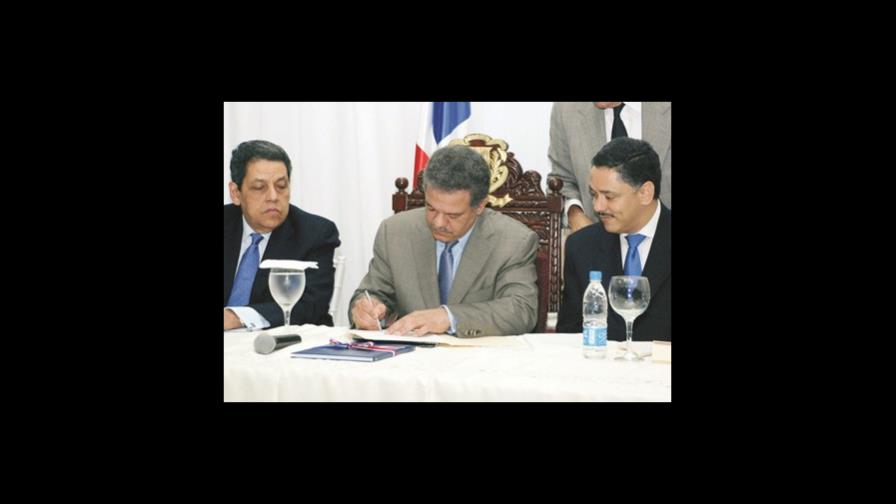
Fernandez signed the regulation for the application of the Migration Law: He visited the Migration offices
Foreign workers will have an ID card; they will create the Migration School
 Diario Libre







SANTO DOMINGO. With the regulations for the application of the Migration Law 285-04 going into effect, foreign workers contracted by local businessmen, will be provided with an ID card that will have the signature and fingerprints and which will be supplied by the Directorate General of Migration (DGM).
Article 73 of the regulations establishes that the DGM will indicate those points of entry for the temporary workers, while Article 74 gives autonomy to the Ministry of Public Health to establish the pertinent sanitary controls to the workers admitted, previous to their transfer to their work place.
The regulations say that the employer responsible for the workers should transport them from the control point to the work place. The same condition applies for their repatriation.
For decades, the Haitians have immigrated to the Dominican Republic in search of jobs. At first they were contracted to work in the sugar mills, but as a result of the fall in sugar related jobs, they have been employed in other areas.
Deportation and the law
Regarding deportation, the legislation says that the Dominican government will remove a foreigner from the national territory for violating the law, under the premise that his return will be conditioned to a special authorization. "The foreigner subject to deportation will assume on his own account or that of the insurance company or of his guarantor the expenses that the DGM incurs," explains Article 137.
When the foreigner is interviewed, a from will be filled out, and in case the person admits any charge that would expose him/her to deportation, a memorandum will be filed for this purpose, and this will be signed by the Immigration Inspector and by the immigrant if that is possible.
Minors, pregnant or lactating women, the elderly and persons seeking asylum should not be detained.
The foreigner who is legal or illegal in the country, and who has an order of deportation pending against him, has the right to exercise the guarantees that are granted by the law. Then the DGM will fill out a form with the information and personal data that have been obtained, in which they will set out the motives for a possible deportation.
Migration School
The document will create in addition, the National Migration School, which will be charged with the training and preparation of the inspectors. Once they have finished their training, the inspectors will have the rank of Immigration officer.
Fernandez signs
After seven years of waiting and two postponements, President Leonel Fernandez signed the regulations for the application of Law 285-04 which regulates the entrance, exit and stay of foreigners in the country.
For this ceremony, the President went to the Directorate General of Migration, in the Centro de los Heroes, in the National District, and when he was interviewed after the signing, he said that with this set of legal rules, the authorities will be able to take the necessary steps for the protection of the national territory.
Fernandez said that the application of the Migration Law is basically the expression of the sovereignty of the Dominican state.
"So this is a great step forward that has been taken, which has taken time, but we managed to do it," said the President.
For his part the Director General of the DGM, Jose Ricardo Taveras, warned that from now on, everyone that enters the country will have to have a properly stamped visa for the type of activity that he expects to carry out in the Dominican Republic.
Database
In compliance with the law and the regulations of the Migration Law, a database will be created so that there will be an exchange of information between the DGI and the Ministry of the Interior and the Police, regarding the foreigners that live in the country. They will also implement administrative measures that will facilitate and smooth the way for foreign investors to obtain their permanent residency. Regarding this particular item, the foreigners will have to invest a minimum of US$200,000 in the country. The signing of the regulations was witnessed by officials, lawyers, and diplomats accredited in the country.
Article 73 of the regulations establishes that the DGM will indicate those points of entry for the temporary workers, while Article 74 gives autonomy to the Ministry of Public Health to establish the pertinent sanitary controls to the workers admitted, previous to their transfer to their work place.
The regulations say that the employer responsible for the workers should transport them from the control point to the work place. The same condition applies for their repatriation.
For decades, the Haitians have immigrated to the Dominican Republic in search of jobs. At first they were contracted to work in the sugar mills, but as a result of the fall in sugar related jobs, they have been employed in other areas.
Deportation and the law
Regarding deportation, the legislation says that the Dominican government will remove a foreigner from the national territory for violating the law, under the premise that his return will be conditioned to a special authorization. "The foreigner subject to deportation will assume on his own account or that of the insurance company or of his guarantor the expenses that the DGM incurs," explains Article 137.
When the foreigner is interviewed, a from will be filled out, and in case the person admits any charge that would expose him/her to deportation, a memorandum will be filed for this purpose, and this will be signed by the Immigration Inspector and by the immigrant if that is possible.
Minors, pregnant or lactating women, the elderly and persons seeking asylum should not be detained.
The foreigner who is legal or illegal in the country, and who has an order of deportation pending against him, has the right to exercise the guarantees that are granted by the law. Then the DGM will fill out a form with the information and personal data that have been obtained, in which they will set out the motives for a possible deportation.
Migration School
The document will create in addition, the National Migration School, which will be charged with the training and preparation of the inspectors. Once they have finished their training, the inspectors will have the rank of Immigration officer.
Fernandez signs
After seven years of waiting and two postponements, President Leonel Fernandez signed the regulations for the application of Law 285-04 which regulates the entrance, exit and stay of foreigners in the country.
For this ceremony, the President went to the Directorate General of Migration, in the Centro de los Heroes, in the National District, and when he was interviewed after the signing, he said that with this set of legal rules, the authorities will be able to take the necessary steps for the protection of the national territory.
Fernandez said that the application of the Migration Law is basically the expression of the sovereignty of the Dominican state.
"So this is a great step forward that has been taken, which has taken time, but we managed to do it," said the President.
For his part the Director General of the DGM, Jose Ricardo Taveras, warned that from now on, everyone that enters the country will have to have a properly stamped visa for the type of activity that he expects to carry out in the Dominican Republic.
Database
In compliance with the law and the regulations of the Migration Law, a database will be created so that there will be an exchange of information between the DGI and the Ministry of the Interior and the Police, regarding the foreigners that live in the country. They will also implement administrative measures that will facilitate and smooth the way for foreign investors to obtain their permanent residency. Regarding this particular item, the foreigners will have to invest a minimum of US$200,000 in the country. The signing of the regulations was witnessed by officials, lawyers, and diplomats accredited in the country.
 Diario Libre

 Continuar con Google