


Health centers violate rules for handling dangerous waste
 Diario Libre







SANTO DOMINGO. When the truck arrived, at 8:00 in the morning, to pick up the waste in the Oncological Hospital, a member of the janitorial staff deposited the last bags of waste. He was dressed in blue jeans, shirt and cloth tennis shoes with rubber soles. His face was uncovered and his hands covered with latex gloves. The bag which he took out of the garbage cart was red in color, and inside it had dangerous hospital waste, to judge from the sign on the place where the waste is deposited: "Biomedical Waste Danger," it said.
The "Rules for the Handling of Waste in Health Establishments," produced by the Natura Foundation, together with the World Health Organization (WHO) and the Pan-American Health Organization (PAHO), establishes that the personnel that handles this type of waste, also called biomedical waste, should use gloves, boots, facemask and apron.
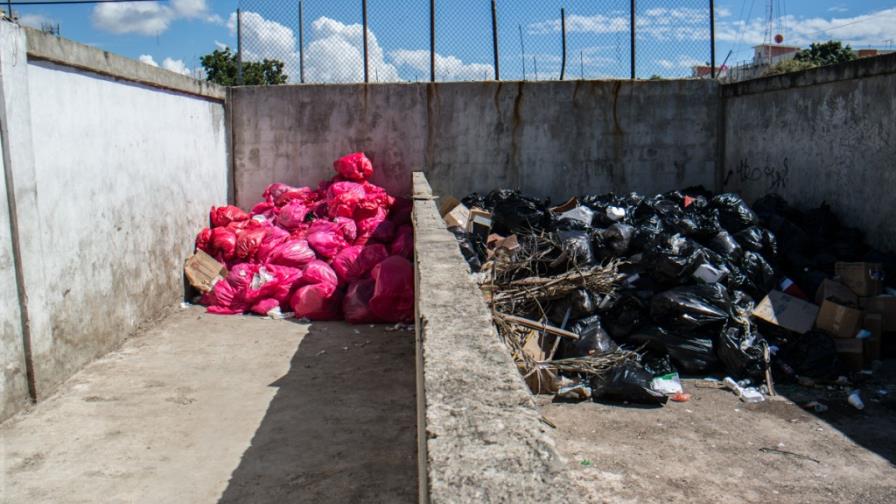
In the refuse pile of the Salvador B. Gautier Hospital, bloody gauze was observed in the black bags that should contain common waste. Among the piled up red bags in a depository close-by, some were open. According to the Manual, gauze pads, IV units, cottoms, gowns and used transfusion apparatus from health centers, should be handled as dangerous contaminating materials. They have to be separated from the moment in which they become waste, and disposed of in red bags for their transfer in closed carts, until they reached the place of provisional storage. The bag should be well closed in order to avoid spillage.
The national regulations for the Comprehensive Management of Infectious Waste, issued by the Ministry of the Environment and Natural Resources, also establishes in article 31 that the transitional storage places should be safe and covered, "providing in this matter protection against high temperatures, pH, humidity, climactic conditions, natural disasters and animals." In some centers, these deposits are still out in the open air.
The violation of the protocols for the handling of this waste is common in many health centers, according to admissions by the authorities themselves.
The Deputy Minister of in Environmental Health of the Ministry of Public Health, Doctor Roberto Berroa, says that all the hospitals have things to be improved upon. He cites the compliance of the work schedule for the transfer of the waste. "If they are giving consultations, you cannot travel with the cart in the waiting area." He also refers to the lack of protection of the employees. "You can find the employees without gloves, that don't have facemasks, and this is not acceptable, there are aspects that have to necessarily be improved," he emphasized.
The Deputy Ministry that Berroa leads is supposed to "promote and sponsor favorable areas for individual and collective health," by means of improving, controlling and correcting the factors represented by physical, chemical, biological and psychosocial risks that impact negatively on health.
Berroa says that the personnel of Environmental Health are disseminated throughout the country, carrying out their labor of inspection, and that they always alert the administration of irregularities. "In many of the cases it is not that they don't have gloves, or the facemasks, but rather that the employee doesn't want to use them, because they are hot, or because he doesn't want to. They are part of the things that we find." He did not speak of any kind of sanction in those cases.
In the Ministry of the Environment, the entity that regulates the final disposal of common and biomedical waste, there are also complaints over the poor handling of this material.
"There is still a group of establishments that do not follow the rules, that do not do any treatment, and you see them (the dangerous waste) thrown in the garbage cans, some in red bags, but others are thrown in the black ones," says Domingo Contreras, the coordinator of Environmental Policy of the Ministry. He cites as an example, the discovery of a fetus in the refuse waste site of Rafey, in Santiago, of which they were able to determine that it came from a hospital among common waste in a black bag.
Fetuses and human body parts that result from amputations, enter into the category of anatomical waste which, according to the protocol by the WHO, should be separated from common and biomedical waste and buried in a cemetery.
Contreras regrets that all the health centers of the country do not provide adequate treatment and final disposal. Up until now, only the Ney Arias Lora Hospital has the autoclave system for treating and incinerating their biomedical waste. Of the hospitals in the capital, 13 pay the Alianza Innovadora de Servicios Ambientales (AIDSA), the only company in the country that collects, transports and gives final disposition of dangerous waste. The other hospitals burn their waste in pits.
The risks
Domingo Contreras warns that, due to the number of trash divers that search the garbage in the refuse dumps without any protection, the poor handling of hospital waste puts their health in danger and could generate epidemics.
Doctor Berroa sounds the alert that, without adequate treatment, there is the risk of disseminating the contamination and that the transmittable infections that reach a hospital return into the population.
In the hospitals
The janitor at the Oncological Hospital did not want to talk with the team of reporters when he was asked. The hospital never answered the request that was made by this newspaper for an explanation regarding the form in which they treat their waste.
At the Gautier, their director admits the faults. This hospital has 251 beds, and their waste production is 0.34 tons per day. It is estimated that 40% of this garbage is dangerous, and the remaining portion is common (food remains, office material, etc.). The volume is high, admits the director of the center, Emma Bodden, who compares it with the 1.78 tons of biomedical waste which on average is produced in the country everyday.
The Gautier is a third level hospital, with surgical specialties, a hemodialysis unit, a blood bank, a clinical laboratory, and it functions as a teaching hospital. "This means that it generates more, since when in a clinic a Doctor goes into surgery, here there goes five students, plus the medical personnel," she indicates.
The city government (cabildo or ayuntamiento) is in charge of the final disposition of the common waste, and AIDSA of the biomedical waste. The latter receives from the hospital RD$36,000 a month. Bodden complains about the delays that on occasion the trucks have in their pickups. "They were not coming with the necessary assiduity. They would come and carry away (the garbage) from the top, and we accumulated the old refuse. It was a difficult period which we have now overcome, thanks be to God."
Internally, the director says that they have to constantly be on top of the personnel of the company that provides the cleaning service, so that they comply with the requirements. She says that with the medical personnel there are no major problems, except perhaps sometimes a nurse in the ambulatory area does not properly dispose of the syringes after using them.
in order to attend the situations which present themselves with the handling of the waste, the Gautier created some two months ago the Morbidity and Mortality Committee, under the leadership of Doctor José Soriano, which among its plans, is creating pressure for the companies so that they comply with the demands, and proceed to put a roof on the temporary disposal center, according to their report.
Background
In May 2001 the Stockholm Convention was signed in which the country's committed themselves to apply preventive measures to the damage to health and the environment derived from persistent organic contaminants (COPs).
In its article 5, the Convention orders the countries to adopt measures to reduce or eliminate the release of dangerous substances.
The Dominican Republic ratified the Convention in December 2006, by means of a resolution of the National Congress Num. 445 - 06, and in 2009 created their national plan for implementation.
The "Rules for the Handling of Waste in Health Establishments," produced by the Natura Foundation, together with the World Health Organization (WHO) and the Pan-American Health Organization (PAHO), establishes that the personnel that handles this type of waste, also called biomedical waste, should use gloves, boots, facemask and apron.
In the refuse pile of the Salvador B. Gautier Hospital, bloody gauze was observed in the black bags that should contain common waste. Among the piled up red bags in a depository close-by, some were open. According to the Manual, gauze pads, IV units, cottoms, gowns and used transfusion apparatus from health centers, should be handled as dangerous contaminating materials. They have to be separated from the moment in which they become waste, and disposed of in red bags for their transfer in closed carts, until they reached the place of provisional storage. The bag should be well closed in order to avoid spillage.
The national regulations for the Comprehensive Management of Infectious Waste, issued by the Ministry of the Environment and Natural Resources, also establishes in article 31 that the transitional storage places should be safe and covered, "providing in this matter protection against high temperatures, pH, humidity, climactic conditions, natural disasters and animals." In some centers, these deposits are still out in the open air.
The violation of the protocols for the handling of this waste is common in many health centers, according to admissions by the authorities themselves.
The Deputy Minister of in Environmental Health of the Ministry of Public Health, Doctor Roberto Berroa, says that all the hospitals have things to be improved upon. He cites the compliance of the work schedule for the transfer of the waste. "If they are giving consultations, you cannot travel with the cart in the waiting area." He also refers to the lack of protection of the employees. "You can find the employees without gloves, that don't have facemasks, and this is not acceptable, there are aspects that have to necessarily be improved," he emphasized.
The Deputy Ministry that Berroa leads is supposed to "promote and sponsor favorable areas for individual and collective health," by means of improving, controlling and correcting the factors represented by physical, chemical, biological and psychosocial risks that impact negatively on health.
Berroa says that the personnel of Environmental Health are disseminated throughout the country, carrying out their labor of inspection, and that they always alert the administration of irregularities. "In many of the cases it is not that they don't have gloves, or the facemasks, but rather that the employee doesn't want to use them, because they are hot, or because he doesn't want to. They are part of the things that we find." He did not speak of any kind of sanction in those cases.
In the Ministry of the Environment, the entity that regulates the final disposal of common and biomedical waste, there are also complaints over the poor handling of this material.
"There is still a group of establishments that do not follow the rules, that do not do any treatment, and you see them (the dangerous waste) thrown in the garbage cans, some in red bags, but others are thrown in the black ones," says Domingo Contreras, the coordinator of Environmental Policy of the Ministry. He cites as an example, the discovery of a fetus in the refuse waste site of Rafey, in Santiago, of which they were able to determine that it came from a hospital among common waste in a black bag.
Fetuses and human body parts that result from amputations, enter into the category of anatomical waste which, according to the protocol by the WHO, should be separated from common and biomedical waste and buried in a cemetery.
Contreras regrets that all the health centers of the country do not provide adequate treatment and final disposal. Up until now, only the Ney Arias Lora Hospital has the autoclave system for treating and incinerating their biomedical waste. Of the hospitals in the capital, 13 pay the Alianza Innovadora de Servicios Ambientales (AIDSA), the only company in the country that collects, transports and gives final disposition of dangerous waste. The other hospitals burn their waste in pits.
The risks
Domingo Contreras warns that, due to the number of trash divers that search the garbage in the refuse dumps without any protection, the poor handling of hospital waste puts their health in danger and could generate epidemics.
Doctor Berroa sounds the alert that, without adequate treatment, there is the risk of disseminating the contamination and that the transmittable infections that reach a hospital return into the population.
In the hospitals
The janitor at the Oncological Hospital did not want to talk with the team of reporters when he was asked. The hospital never answered the request that was made by this newspaper for an explanation regarding the form in which they treat their waste.
At the Gautier, their director admits the faults. This hospital has 251 beds, and their waste production is 0.34 tons per day. It is estimated that 40% of this garbage is dangerous, and the remaining portion is common (food remains, office material, etc.). The volume is high, admits the director of the center, Emma Bodden, who compares it with the 1.78 tons of biomedical waste which on average is produced in the country everyday.
The Gautier is a third level hospital, with surgical specialties, a hemodialysis unit, a blood bank, a clinical laboratory, and it functions as a teaching hospital. "This means that it generates more, since when in a clinic a Doctor goes into surgery, here there goes five students, plus the medical personnel," she indicates.
The city government (cabildo or ayuntamiento) is in charge of the final disposition of the common waste, and AIDSA of the biomedical waste. The latter receives from the hospital RD$36,000 a month. Bodden complains about the delays that on occasion the trucks have in their pickups. "They were not coming with the necessary assiduity. They would come and carry away (the garbage) from the top, and we accumulated the old refuse. It was a difficult period which we have now overcome, thanks be to God."
Internally, the director says that they have to constantly be on top of the personnel of the company that provides the cleaning service, so that they comply with the requirements. She says that with the medical personnel there are no major problems, except perhaps sometimes a nurse in the ambulatory area does not properly dispose of the syringes after using them.
in order to attend the situations which present themselves with the handling of the waste, the Gautier created some two months ago the Morbidity and Mortality Committee, under the leadership of Doctor José Soriano, which among its plans, is creating pressure for the companies so that they comply with the demands, and proceed to put a roof on the temporary disposal center, according to their report.
Background
In May 2001 the Stockholm Convention was signed in which the country's committed themselves to apply preventive measures to the damage to health and the environment derived from persistent organic contaminants (COPs).
In its article 5, the Convention orders the countries to adopt measures to reduce or eliminate the release of dangerous substances.
The Dominican Republic ratified the Convention in December 2006, by means of a resolution of the National Congress Num. 445 - 06, and in 2009 created their national plan for implementation.
 Diario Libre

 Continuar con Google