


Many believe LF-MV are re-editing caciquism
Candidates "fingered" by leaders produce conflict and division
 Diario Libre







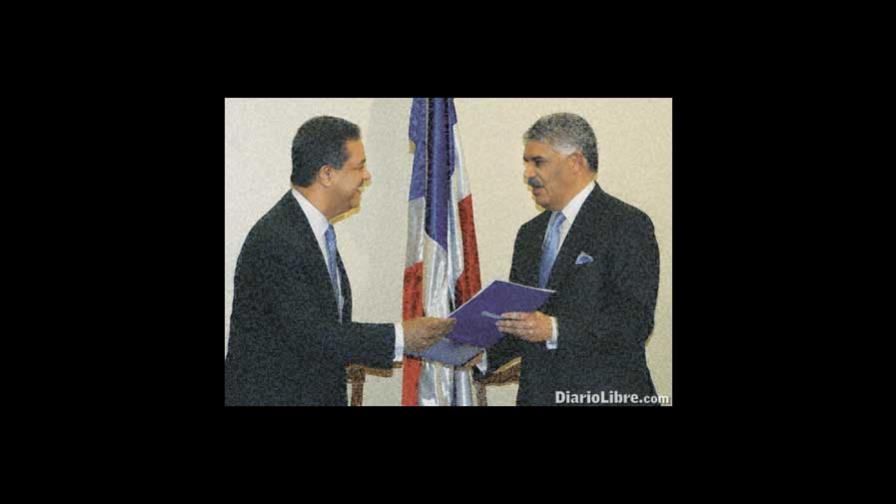
SANTO DOMINGO. The move that is being handled by the highest levels of the Dominican Liberation and Dominican Revolutionary parties that "reserves" candidacies for congressional and municipal posts for the 2010 elections, redoes the old practice of "pointing out" used by the deceased political leaders, Joaquin Balaguer, Jose Francisco Peña Gomez and Juan Bosch.
If unpleasant memory for the conflicts and struggles between leaders and party militants, the copy of "pointing out or fingering" that Leonel Fernandez and Miguel Vargas Maldonado are trying out for the next elections begins to produce conflicts among aspiring candidates and their followers, that in the face of this possibility, are now beginning to challenge the designations of the party bosses.
Quite far from the similarities with the leadership of Balaguer, Peña Gomez and Bosch, with that of Fernandez, Vargas and on this occasion, with Carolos Morales Troncoso in the Social Christian Reformist Party (PRSC), warning signs and difficulties are seen in the resistance of those aspiring to elective office that are demanding to go to the internal processes of selection and reject the imposition of "the finger pointing".
The latest event that occurred in the big, or traditional, parties, in which their leaders have established agreements, appears to have established a pact of alternating in power and of reaffirming a strengthening of the caudillos in these organizations, according to the sociologist and professor at the Autonomous University of Santo Domingo (UASD), Celedonio Jimenez.
"Little caudillos" exaggerate
For next year's election process, the top leaders of the PLD decided to "reserve" 51 of the 178 deputy positions, 18 of the 32 senate seats, the 229 municipal districts and all of the cities where they won in the 2004 elections, and this has produced rejection and disgust at all levels, accompanied by an intensification of lobbying by the aspiring candidates with the party's highest leaders.
In the PRD, in much the same way, the intention of the team led by Vargas Maldonado to "indicate" more than 60% of the posts for Congress and the city councils for the upcoming elections has cause a conflict with the principle leaders of the different groups within the party. Former President Hipolito Mejia warned of the trauma that "indicating with the finger (pointing out)" would cause in the PRD, putting to one side clean and transparent elections in the whole country.
In the PLD, very close collaborators of President Fernandez were maneuvering to bring about their "appointments" by the Leader to candidacies for senate seats, or deputations or mayoralties within the rolls of the "reserved" by the Political Committee, and this has unleashed a ferocious and uneven fight all across the nation.
The proposal by the PRD hierarchy to indicate and choose their candidates by the level of popularity that polls indicate, keeps the organization divided between those that back the project and those that demand the celebrations of conventions or primaries. Among the positions that the PRD would "reserve" are included those of the parties with which it will formalize alliances.
In the PRSC, where caudillo rule was the norm until the death of their leader Joaquin Balaguer in 2002, they allied themselves with the PRD in the 2006 congressional and municipal elections, winning 22 deputy seats, five senatorial seats and 27 city mayors, but their ties with the PLD or the PRD in the upcoming elections look shaky.
Party crisis
Social scientist Celedonio Jimenez said that he felt that the caudillo politics in the two big parties of the system is another expression of the crisis in party politics in the Dominican Republic. He says that it is only in appearance that they look strong.
"In parties that are solidly built and based on doctrines and principles, it is not possible for a leader or a small clique to decide the selection of the candidates to congressional and municipal posts on an individual decision", he noted.
Caudillo rule is a mistake
The fostering of caudillo party politics expresses a false behavior in the process of political institutionalization in the Dominican Republic, according to the sociologist Celedonio Jimenez. He estimates that what is happening in the country at the present time is a type of strengthening of the caudillos, above all, starting with the recent processes that appear to establish a pact of alternative governments on the part of the big or traditional parties. "Certainly there is a strengthening of the caudillos and a reaffirmation beginning with those events", he says.
If unpleasant memory for the conflicts and struggles between leaders and party militants, the copy of "pointing out or fingering" that Leonel Fernandez and Miguel Vargas Maldonado are trying out for the next elections begins to produce conflicts among aspiring candidates and their followers, that in the face of this possibility, are now beginning to challenge the designations of the party bosses.
Quite far from the similarities with the leadership of Balaguer, Peña Gomez and Bosch, with that of Fernandez, Vargas and on this occasion, with Carolos Morales Troncoso in the Social Christian Reformist Party (PRSC), warning signs and difficulties are seen in the resistance of those aspiring to elective office that are demanding to go to the internal processes of selection and reject the imposition of "the finger pointing".
The latest event that occurred in the big, or traditional, parties, in which their leaders have established agreements, appears to have established a pact of alternating in power and of reaffirming a strengthening of the caudillos in these organizations, according to the sociologist and professor at the Autonomous University of Santo Domingo (UASD), Celedonio Jimenez.
"Little caudillos" exaggerate
For next year's election process, the top leaders of the PLD decided to "reserve" 51 of the 178 deputy positions, 18 of the 32 senate seats, the 229 municipal districts and all of the cities where they won in the 2004 elections, and this has produced rejection and disgust at all levels, accompanied by an intensification of lobbying by the aspiring candidates with the party's highest leaders.
In the PRD, in much the same way, the intention of the team led by Vargas Maldonado to "indicate" more than 60% of the posts for Congress and the city councils for the upcoming elections has cause a conflict with the principle leaders of the different groups within the party. Former President Hipolito Mejia warned of the trauma that "indicating with the finger (pointing out)" would cause in the PRD, putting to one side clean and transparent elections in the whole country.
In the PLD, very close collaborators of President Fernandez were maneuvering to bring about their "appointments" by the Leader to candidacies for senate seats, or deputations or mayoralties within the rolls of the "reserved" by the Political Committee, and this has unleashed a ferocious and uneven fight all across the nation.
The proposal by the PRD hierarchy to indicate and choose their candidates by the level of popularity that polls indicate, keeps the organization divided between those that back the project and those that demand the celebrations of conventions or primaries. Among the positions that the PRD would "reserve" are included those of the parties with which it will formalize alliances.
In the PRSC, where caudillo rule was the norm until the death of their leader Joaquin Balaguer in 2002, they allied themselves with the PRD in the 2006 congressional and municipal elections, winning 22 deputy seats, five senatorial seats and 27 city mayors, but their ties with the PLD or the PRD in the upcoming elections look shaky.
Party crisis
Social scientist Celedonio Jimenez said that he felt that the caudillo politics in the two big parties of the system is another expression of the crisis in party politics in the Dominican Republic. He says that it is only in appearance that they look strong.
"In parties that are solidly built and based on doctrines and principles, it is not possible for a leader or a small clique to decide the selection of the candidates to congressional and municipal posts on an individual decision", he noted.
Caudillo rule is a mistake
The fostering of caudillo party politics expresses a false behavior in the process of political institutionalization in the Dominican Republic, according to the sociologist Celedonio Jimenez. He estimates that what is happening in the country at the present time is a type of strengthening of the caudillos, above all, starting with the recent processes that appear to establish a pact of alternative governments on the part of the big or traditional parties. "Certainly there is a strengthening of the caudillos and a reaffirmation beginning with those events", he says.
 Diario Libre

 Continuar con Google