


Once again the Cibao-Sur Highway stirs debate
 Diario Libre







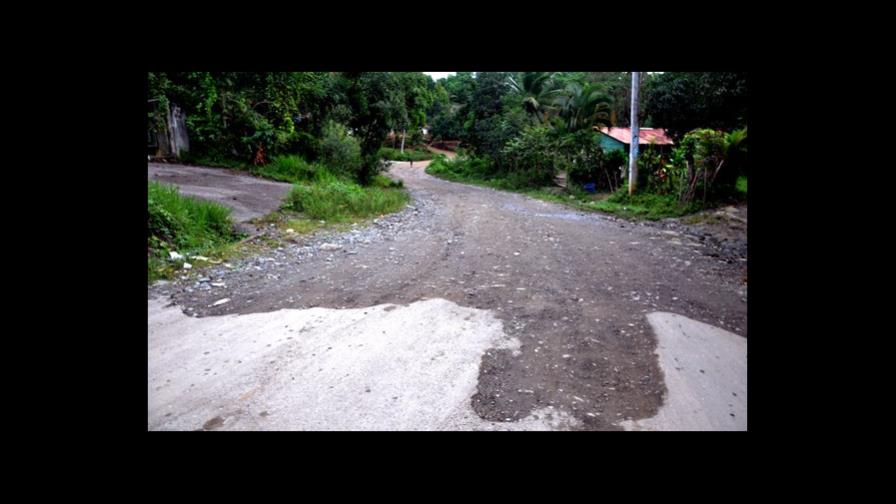
Public Works opened a public tender for the reconstruction of the highway between Piedra Blanca and Ocoa (Cibao-Sur), but groups from the Cibao are pressuring, in addition, for the repair of an alternative route through Constanza, that will allow for an interconnection of the two regions. The Cibao and the South are two regions that are economically complementary.
By Yvonny Alcantara and Cornelio Batista
The dilemma of the Cibao-Sur route
In the South (Sur) and in the Cibao, nearly everyone is in agreement on the need for a highway which connects the two regions. What they do not agree on is which route the road should take.
In spite of the fact that the Ministry of Public Works has opened a tender for the reconstruction of the Piedra Blanca-Rancho Arriba-San Jose de Ocoa highway, with the idea of beginning next February, groups in the Cibao are fighting for the construction of an alternate route to this one.
One of the strongest movements is in La Vega, where productive sectors call for the rebuilding and expansion of the Constanza-San Jose de Ocoa highway. Other groups want the route to be Constanza-Limoncito-Guayabal-Padre las Casas, and others suggest Constanza-Pinal Parejo-Guayabal-Padre las Casas. The last two link the provinces of La Vega (in the North) and Azua (in the South) and are between 65 kilometers long-the first option, and 50 kilometers long-the second option.
The president of the National Union of Vegetable Producers (Unaproa) Berto Collado, says that the reconstruction of the routes that leave Constanza would permit the sale of 20% of their production in the South, something that is not happening now. "The producers of Constanza do not have any commercial ties with the South, but if they rebuild this highway, we will have a new market," said Collado.
In San Juan de la Maguana, they do not look upon the route to Ocoa with favor. Manuel Matos, the president of the Farmer's Committee of San Juan de la Maguana, which brings together about 1,600 farming and cattle farmer, is in agreement with the idea of a Cibao-Sur connection, but not with Ocoa.
"I believe that really cuts the distance between the most important productive center of the Cibao, Santiago, and the South region. Through there-San Jose de Ocoa-is not cutting the distance effectively," Matos says.
Since 1970 more than 10 routes have been suggested, which would join these two regions, which are economically complementary, but very unequal with regard to development. The majority have been blocked by the warnings of the environmentalists regarding the negative consequences that these roads would generate for the environment, since nearly all of them cross the Central Mountain Range at some point, and this is the nation's principle water and biodiversity reserve.
One of the proposals which had the most acceptance was the Santiago-San Juan highway, that was thought up during the administration of President Antonio Guzman (1978-1982), and they even went so far as to have topographic studies carried out and financial negotiations went on with Brazil. But according to testimonies of some of the protagonists of that period, the financial crisis swept away the project.
In 2008 the idea of the Santiago-San Juan route was taken up once again, but this time the proposed route would end in Santiago Rodriguez. Still today, there are many that prefer this trajectory, which would begin in Ybonico, continue to Altos de los Copeyes, the Cruz del Negro, Sidra de Toma and come out in Moncion, with a fork in the road to Santiago Rodriguez and the other to Mao and Santiago.
One of the proponents is the bishop of San Juan, Jose Dolores Grullon, who went so far as to organize a walk to demonstrate that the route is possible and that it does not affect the Central Mountains.
Nevertheless, his latest perception is not shared by the environmentalist Eluterio Martinez, who vehemently opposes the San Juan-Santiago Rodriguez route because it would impact the headwaters of several important rivers in the country. "Through Santiago Rodriguez, for sure not that way. There I do oppose it," says Martinez.
Sticking to his route
While the people in the Cibao (Cibaeños) continue fighting for other routes, in Ocoa they trust that the reconstruction of the Piedra Blanca-Rancho Arriba highway will begin starting next February, as was announced by the Minister of Public Works, Victor Diaz Rua.
"The people are waiting for this project to begin because it is a priority for the development of the province and entails the north-south tie-in, which will develop the two regions," says Maximo A. de la Cruz, the president of the Development Association of San Jose de Ocoa.
Ocoa, recently hit by several natural phenomena, is facing problems getting its production out to markets, due to the poor condition of the road that goes from Rancho Arriba to Piedra Blanca and due to the vulnerable condition of the bridge that leads to the Sanchez Highway.
Because of this, only 30% of the Rancho Arriba farm production reaches the Cibao. This stretch of road, built in 1971 during the government of Joaquin Balaguer is just 32 kilometers long, but for vehicles to cross it takes an hour and a half.
Driver Jesus Maria Suarez, who covers the route Piedra Blanca-Juan Adrian, said that due to the terrible state of the highway he only does one trip every two days. "Every two weeks or every month, I have to take the pickup truck to the shop so that they can tighten it up, because the bolts are loosened by all the potholes in the road," Suarez said.
In these conditions, the fuel expenses are also duplicated. Francis Guzman, who carries vegetables in a truck from Rancho Arriba to Santiago, stresses that every day he spends RD$3,000 on fuel to do the route, an amount that would be halved if the highway was in good shape.
It was because of these conditions that investors and residents in the towns located along the route of the highway abandoned the area, although some, after the announcement by Public Works, are returning to the region.
Position of environmentalists
Consulted regarding these projects, the Ministry of the Environment answered through its press office that "it has opposed and opposes the construction of a new highway that impacts the protected areas." This is the same position of the Cibao Ecological Society (Soeci). This group rejects the routes that would join La Vega with Azua and the proposal of the bishop Grullon, because of the damage that they would cause to the environment.
The president of the entity, Andres Blanco, argues that these areas are the headwaters of the major rivers such as the Yaque del Norte, Bao, Mao and Yaque del Sur, that are absolutely necessary for the farm, energy and drinking water production of over half the nation's population.
On the other hand, both the Ministry of the Environment, Soeci and Eleuterio Martinez prefer the reconstruction of the Piedra Blanca-San Jose de Ocoa highway because it is an existing roadway and the effects to the environment would be much less. This does not mean-according to Martinez-that there are no worries in the environmental sector and that the highway will leave the protected areas untouched. According to what he showed Diario Libre, the Piedra Blanca-Ocoa route goes through the lowest part of the Humeadora National Park, a reserve of the walnut tree which is practically in extinction and will also impact the Maimon and Banilejo rivers.
Routes since 1970
-La Vega-Constanza-San Juan de la Maguana
-Santiago-La Vega-Villa Altagracia-San Cristobal-Azua-San Juan
-Santiago-Santiago Rodriguez-Dajabon-Elias Piña-San Juan
-Santiago-Piedra Blanca-Juan Adrián-Rancho Arriba-San José de Ocoa-Cruce de Ocoa-San Juan.
-Santiago-La Vega-Jarabacoa-Constanza-Sabana Larga-San José De Ocoa- Azua -San Juan.
-San Juan-San José de las Matas-Santiago.
- Constanza-Padre Las Casas-San Juan.
-Yabonico-Altos de los Copeyes- la Cruz del Negro-La Sidra de Toma- para salir a Monción.
-Santiago-San José de las Matas-Monción, La Leonor-Vallejuelo-San Juan.
By Yvonny Alcantara and Cornelio Batista
The dilemma of the Cibao-Sur route
In the South (Sur) and in the Cibao, nearly everyone is in agreement on the need for a highway which connects the two regions. What they do not agree on is which route the road should take.
In spite of the fact that the Ministry of Public Works has opened a tender for the reconstruction of the Piedra Blanca-Rancho Arriba-San Jose de Ocoa highway, with the idea of beginning next February, groups in the Cibao are fighting for the construction of an alternate route to this one.
One of the strongest movements is in La Vega, where productive sectors call for the rebuilding and expansion of the Constanza-San Jose de Ocoa highway. Other groups want the route to be Constanza-Limoncito-Guayabal-Padre las Casas, and others suggest Constanza-Pinal Parejo-Guayabal-Padre las Casas. The last two link the provinces of La Vega (in the North) and Azua (in the South) and are between 65 kilometers long-the first option, and 50 kilometers long-the second option.
The president of the National Union of Vegetable Producers (Unaproa) Berto Collado, says that the reconstruction of the routes that leave Constanza would permit the sale of 20% of their production in the South, something that is not happening now. "The producers of Constanza do not have any commercial ties with the South, but if they rebuild this highway, we will have a new market," said Collado.
In San Juan de la Maguana, they do not look upon the route to Ocoa with favor. Manuel Matos, the president of the Farmer's Committee of San Juan de la Maguana, which brings together about 1,600 farming and cattle farmer, is in agreement with the idea of a Cibao-Sur connection, but not with Ocoa.
"I believe that really cuts the distance between the most important productive center of the Cibao, Santiago, and the South region. Through there-San Jose de Ocoa-is not cutting the distance effectively," Matos says.
Since 1970 more than 10 routes have been suggested, which would join these two regions, which are economically complementary, but very unequal with regard to development. The majority have been blocked by the warnings of the environmentalists regarding the negative consequences that these roads would generate for the environment, since nearly all of them cross the Central Mountain Range at some point, and this is the nation's principle water and biodiversity reserve.
One of the proposals which had the most acceptance was the Santiago-San Juan highway, that was thought up during the administration of President Antonio Guzman (1978-1982), and they even went so far as to have topographic studies carried out and financial negotiations went on with Brazil. But according to testimonies of some of the protagonists of that period, the financial crisis swept away the project.
In 2008 the idea of the Santiago-San Juan route was taken up once again, but this time the proposed route would end in Santiago Rodriguez. Still today, there are many that prefer this trajectory, which would begin in Ybonico, continue to Altos de los Copeyes, the Cruz del Negro, Sidra de Toma and come out in Moncion, with a fork in the road to Santiago Rodriguez and the other to Mao and Santiago.
One of the proponents is the bishop of San Juan, Jose Dolores Grullon, who went so far as to organize a walk to demonstrate that the route is possible and that it does not affect the Central Mountains.
Nevertheless, his latest perception is not shared by the environmentalist Eluterio Martinez, who vehemently opposes the San Juan-Santiago Rodriguez route because it would impact the headwaters of several important rivers in the country. "Through Santiago Rodriguez, for sure not that way. There I do oppose it," says Martinez.
Sticking to his route
While the people in the Cibao (Cibaeños) continue fighting for other routes, in Ocoa they trust that the reconstruction of the Piedra Blanca-Rancho Arriba highway will begin starting next February, as was announced by the Minister of Public Works, Victor Diaz Rua.
"The people are waiting for this project to begin because it is a priority for the development of the province and entails the north-south tie-in, which will develop the two regions," says Maximo A. de la Cruz, the president of the Development Association of San Jose de Ocoa.
Ocoa, recently hit by several natural phenomena, is facing problems getting its production out to markets, due to the poor condition of the road that goes from Rancho Arriba to Piedra Blanca and due to the vulnerable condition of the bridge that leads to the Sanchez Highway.
Because of this, only 30% of the Rancho Arriba farm production reaches the Cibao. This stretch of road, built in 1971 during the government of Joaquin Balaguer is just 32 kilometers long, but for vehicles to cross it takes an hour and a half.
Driver Jesus Maria Suarez, who covers the route Piedra Blanca-Juan Adrian, said that due to the terrible state of the highway he only does one trip every two days. "Every two weeks or every month, I have to take the pickup truck to the shop so that they can tighten it up, because the bolts are loosened by all the potholes in the road," Suarez said.
In these conditions, the fuel expenses are also duplicated. Francis Guzman, who carries vegetables in a truck from Rancho Arriba to Santiago, stresses that every day he spends RD$3,000 on fuel to do the route, an amount that would be halved if the highway was in good shape.
It was because of these conditions that investors and residents in the towns located along the route of the highway abandoned the area, although some, after the announcement by Public Works, are returning to the region.
Position of environmentalists
Consulted regarding these projects, the Ministry of the Environment answered through its press office that "it has opposed and opposes the construction of a new highway that impacts the protected areas." This is the same position of the Cibao Ecological Society (Soeci). This group rejects the routes that would join La Vega with Azua and the proposal of the bishop Grullon, because of the damage that they would cause to the environment.
The president of the entity, Andres Blanco, argues that these areas are the headwaters of the major rivers such as the Yaque del Norte, Bao, Mao and Yaque del Sur, that are absolutely necessary for the farm, energy and drinking water production of over half the nation's population.
On the other hand, both the Ministry of the Environment, Soeci and Eleuterio Martinez prefer the reconstruction of the Piedra Blanca-San Jose de Ocoa highway because it is an existing roadway and the effects to the environment would be much less. This does not mean-according to Martinez-that there are no worries in the environmental sector and that the highway will leave the protected areas untouched. According to what he showed Diario Libre, the Piedra Blanca-Ocoa route goes through the lowest part of the Humeadora National Park, a reserve of the walnut tree which is practically in extinction and will also impact the Maimon and Banilejo rivers.
Routes since 1970
-La Vega-Constanza-San Juan de la Maguana
-Santiago-La Vega-Villa Altagracia-San Cristobal-Azua-San Juan
-Santiago-Santiago Rodriguez-Dajabon-Elias Piña-San Juan
-Santiago-Piedra Blanca-Juan Adrián-Rancho Arriba-San José de Ocoa-Cruce de Ocoa-San Juan.
-Santiago-La Vega-Jarabacoa-Constanza-Sabana Larga-San José De Ocoa- Azua -San Juan.
-San Juan-San José de las Matas-Santiago.
- Constanza-Padre Las Casas-San Juan.
-Yabonico-Altos de los Copeyes- la Cruz del Negro-La Sidra de Toma- para salir a Monción.
-Santiago-San José de las Matas-Monción, La Leonor-Vallejuelo-San Juan.
 Diario Libre

 Continuar con Google