


Quirino becomes a star witness
 Diario Libre







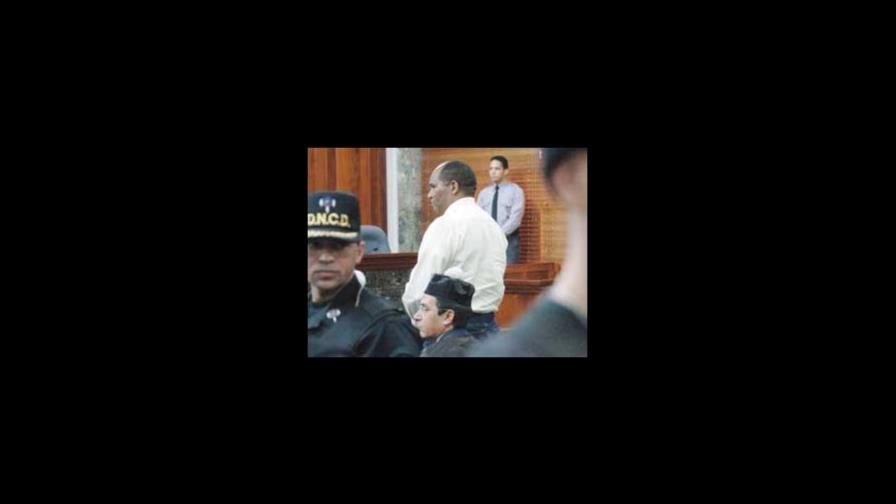
SANTO DOMINGO.-The "meal" that the former Army captain Quirino Ernesto Paulino Castillo offed the United States government was so good that the federal prosecutors for the Southern District of New York did not hesitate to to accept the deal for visas for 18 family members of the accuses, the return of part of his fortune and guaranteed entry into the Federal Witness Protection Program.
The negotiated agreement worked out by Quirino and his lawyer Lawrence F. Ruggiero, has no precedent in this type of plea bargaining between the Justice Department, the DEA and the accused in cases of international drug trafficking. According to a contact that reporter Miguel Cruz Tejada has in Washington and that has been closely tied to the inner workings between Quirino's legal representatives and the federal prosecutors in this case, the negotiations were eased because the United States wanted to get to the drug lords of Mexico and Colombia directly, as these were the alleged supplier of the former Dominican captain as part of a widespread international network, and are the ones controlling at this time an important segment of Central American and South American territory. The network uses Caribbean countries such as the Dominican Republic, Haiti, Puerto Rico and some of the smaller islands as bridges where Quirino worked as a cocaine distributor or front for the top bosses.
It has been said that many of the million dollar properties of the former military officer that were seized by the Dominican government were bought with laundered money that came from these networks and was handed over to Quirino dating from the 1980s in the frontier area in the South between Haiti and the DR by members of the Colombian cartels.
The source said that if the case of drug trafficker Carlos Leder Rivas is taken into account, one of the first foreigners to be admitted into the Witness Protection Program, only he, his wife and children were offered protection in exchange for talking about several leaders of Colombian criminal organizations. "But the offer by Quirino to offer a list of more than thirty possible leaders of regional cartels in the Caribbean, Colombia and Mexico was so tempting for the prosecutors that it was considered historic and without precedent. This commitment pushed the negotiations between the parts."
The deal was referred to Judge Kimba M. Wood and in it the most important obligation of Quirino is to become a star prosecution witness in court, to point out face to face with a jury the persons supposedly responsible for sending huge loads of cocaine, heroine, ecstasy, marijuana and other psychotropic drugs to the Dominican Republic and Haiti to be shipped to other countries such as Puerto Rico, Mexico and Canada that are next to the major consumer market of the United States.
In August 2008 reporter Cruz Tejada published an exclusive report on the negotiations and said that the DEA and the Justice Department were working on a list of more than thirty names of Dominicans involved in the case that would lead to a second phase of the Quirino case. The deal not only includes names of those that were physically involved in the gang but also those who protected and benefited from the illegal business.
It was pointed out that Quirino was "chosen" because in the first place he came from a town that was stuck in the Deep South and secondly, he was a person without name, prestige or importance in the Dominican society which facilitated him to go around without being noticed, easing the coverup of all of the illegal operations.
According to the informant, Quirino told his captors that he was able to purchase his enlistment in the Dominican Armed Forces which saw him rise to the rank of a captain, not to use the uniform but because that status enabled him to evade and suspicion and use it as a cover in case he was ever identified as part of any drug trafficking ring.
He also said that as the years went by and his fortune grew, the possibility of hiding behind his rank diminished, and his "power" and his "influence" grew in official and corporate circles and it became necessary to "cover up" part of the dirty money with businesses that followed the real estate ‘boom' that prevailed in the country. This was how he came into contact, through intermediaries, with the twins Jean Paul and David Ulloa, Eduardo Rodriguez Cordero and his brother Samuel ("Sammy"), Juan Cruz Crisostomo and others that he assigned to place investments in luxury towers, condominiums, haciendas, villas and business office buildings as well as apartments, especially in Santo Domingo and La Romana.
The others, which only had roles as "go betweens" in the network to others, such as the recently sentenced Francisco Ortega de Leon (Chico), he assigned the "dirty work" on the streets and in the barrios. This person was sentenced to 13 years, three months on 2 September 2008, the second highest sentence handed down in this case, next to the 14 ½ years given to Rodriguez Cordero.
The first phase of the Quirino case, which led to the arrest of 21 persons and saw 15 of them extradited to the United States from the Dominican Republic, revealed that the focus of the network from the 1980s until 2000 was not on recruiting any military personnel in the international operations.
Among this group only three were absolved, seventeen pleaded guilty and made plea bargains and one, the businesswoman Fatima Henriquez Diaz, decided to go to court in September with the testimony of Jean Paul Ulloa against her, and she was found guilty by the federal jury and is awaiting sentencing.
Besides Quirino, the former colonel Lidio Nin Terrero and the former lieutenant Ricardo Reyes Mendoza were the only military people involved in the case. The former negotiated a 9 ½ year sentence, and the latter was absolved of any wrong-doing and returned to the Dominican Republic, paying his own fare.
Besides Reyes Mendoza, the employee of the money exchange house "Abel" in Moca, Richard Pena Mejia, was also released after fulfilling a few requisites of "monitored parole" imposed by the justice system and was even allowed to work in a bodega. One of the few successes obtained bythe lawyers for the accused. Pena Mejia was represented by in the process by the Dominican lawyer Stanislao German who from the first day said his client was innocent, and accused the federal prosecutors of unjustly accusing him since he was the victim of a "piramide" of which he was not a part.
Cruz Crisostomo, who in 2005 also negotiated a deal with the prosecutors, became the person who identified Fatima, and never set foot in jail, and was released for time served. He was not called to testify in the trial, but as a US citizen, his affidavit that detailed how he was involved with the business woman from Cotui and who, according to the prosecutors, moved more than US$300,000 dollars in laundered money which was sent from banks in Miami to Rodriguez Cordero.
Both the media and the lawyers for the other accused, based on precedents on other, similar cases, began to suspect possible negotiations between Quirino and the prosecutors after the trial against him that was originally set for June 2008 began to be set back several times and the expectations regarding a possible conviction were becoming weaker as time went by and Quirino did not return to court.
Added to this was the mystery and the complete silence of the prosecutors, the lawyer and the office of Judge Wood with relation to the evolution of the judicial situation of the former captain. As the years passed, Quirino virtually disappeared from the strategies of the prosecutors that were looking for what they finally got: changing the accused into a star witness.
A lot has been made, in local New York judicial circles of the fact that the new person implicated will be identified when the arrests begin after authorization from a Grand Jury that should be seated possibly by the middle or the end of January to analyze the information given to the prosecutors by Quirino. The rest of what is being said is speculation seen in the talk shows that surround the development of the second phase of the process.
In September of last year, an assistant to Judge Kimba M. Wood told reporter Cruz Tejada by telephone that with the trial of Fatima Henriquez Diaz, "the case neither closes nor is it sealed," insinuating that the investigations would continue, and this is what is happening now.
When the Grand Jury meets and recommends arrest warrants to the judges based on "probable Cause", this decision will then go as sealed information that is part of the secret judicial phase in the United States, above all when this process could put the lives of informants, under cover operatives or star witnesses at risk.
It is thought that according to lawyers involved in the case that the second phase will be much longer and complicated than the first phase
The negotiated agreement worked out by Quirino and his lawyer Lawrence F. Ruggiero, has no precedent in this type of plea bargaining between the Justice Department, the DEA and the accused in cases of international drug trafficking. According to a contact that reporter Miguel Cruz Tejada has in Washington and that has been closely tied to the inner workings between Quirino's legal representatives and the federal prosecutors in this case, the negotiations were eased because the United States wanted to get to the drug lords of Mexico and Colombia directly, as these were the alleged supplier of the former Dominican captain as part of a widespread international network, and are the ones controlling at this time an important segment of Central American and South American territory. The network uses Caribbean countries such as the Dominican Republic, Haiti, Puerto Rico and some of the smaller islands as bridges where Quirino worked as a cocaine distributor or front for the top bosses.
It has been said that many of the million dollar properties of the former military officer that were seized by the Dominican government were bought with laundered money that came from these networks and was handed over to Quirino dating from the 1980s in the frontier area in the South between Haiti and the DR by members of the Colombian cartels.
The source said that if the case of drug trafficker Carlos Leder Rivas is taken into account, one of the first foreigners to be admitted into the Witness Protection Program, only he, his wife and children were offered protection in exchange for talking about several leaders of Colombian criminal organizations. "But the offer by Quirino to offer a list of more than thirty possible leaders of regional cartels in the Caribbean, Colombia and Mexico was so tempting for the prosecutors that it was considered historic and without precedent. This commitment pushed the negotiations between the parts."
The deal was referred to Judge Kimba M. Wood and in it the most important obligation of Quirino is to become a star prosecution witness in court, to point out face to face with a jury the persons supposedly responsible for sending huge loads of cocaine, heroine, ecstasy, marijuana and other psychotropic drugs to the Dominican Republic and Haiti to be shipped to other countries such as Puerto Rico, Mexico and Canada that are next to the major consumer market of the United States.
In August 2008 reporter Cruz Tejada published an exclusive report on the negotiations and said that the DEA and the Justice Department were working on a list of more than thirty names of Dominicans involved in the case that would lead to a second phase of the Quirino case. The deal not only includes names of those that were physically involved in the gang but also those who protected and benefited from the illegal business.
It was pointed out that Quirino was "chosen" because in the first place he came from a town that was stuck in the Deep South and secondly, he was a person without name, prestige or importance in the Dominican society which facilitated him to go around without being noticed, easing the coverup of all of the illegal operations.
According to the informant, Quirino told his captors that he was able to purchase his enlistment in the Dominican Armed Forces which saw him rise to the rank of a captain, not to use the uniform but because that status enabled him to evade and suspicion and use it as a cover in case he was ever identified as part of any drug trafficking ring.
He also said that as the years went by and his fortune grew, the possibility of hiding behind his rank diminished, and his "power" and his "influence" grew in official and corporate circles and it became necessary to "cover up" part of the dirty money with businesses that followed the real estate ‘boom' that prevailed in the country. This was how he came into contact, through intermediaries, with the twins Jean Paul and David Ulloa, Eduardo Rodriguez Cordero and his brother Samuel ("Sammy"), Juan Cruz Crisostomo and others that he assigned to place investments in luxury towers, condominiums, haciendas, villas and business office buildings as well as apartments, especially in Santo Domingo and La Romana.
The others, which only had roles as "go betweens" in the network to others, such as the recently sentenced Francisco Ortega de Leon (Chico), he assigned the "dirty work" on the streets and in the barrios. This person was sentenced to 13 years, three months on 2 September 2008, the second highest sentence handed down in this case, next to the 14 ½ years given to Rodriguez Cordero.
The first phase of the Quirino case, which led to the arrest of 21 persons and saw 15 of them extradited to the United States from the Dominican Republic, revealed that the focus of the network from the 1980s until 2000 was not on recruiting any military personnel in the international operations.
Among this group only three were absolved, seventeen pleaded guilty and made plea bargains and one, the businesswoman Fatima Henriquez Diaz, decided to go to court in September with the testimony of Jean Paul Ulloa against her, and she was found guilty by the federal jury and is awaiting sentencing.
Besides Quirino, the former colonel Lidio Nin Terrero and the former lieutenant Ricardo Reyes Mendoza were the only military people involved in the case. The former negotiated a 9 ½ year sentence, and the latter was absolved of any wrong-doing and returned to the Dominican Republic, paying his own fare.
Besides Reyes Mendoza, the employee of the money exchange house "Abel" in Moca, Richard Pena Mejia, was also released after fulfilling a few requisites of "monitored parole" imposed by the justice system and was even allowed to work in a bodega. One of the few successes obtained bythe lawyers for the accused. Pena Mejia was represented by in the process by the Dominican lawyer Stanislao German who from the first day said his client was innocent, and accused the federal prosecutors of unjustly accusing him since he was the victim of a "piramide" of which he was not a part.
Cruz Crisostomo, who in 2005 also negotiated a deal with the prosecutors, became the person who identified Fatima, and never set foot in jail, and was released for time served. He was not called to testify in the trial, but as a US citizen, his affidavit that detailed how he was involved with the business woman from Cotui and who, according to the prosecutors, moved more than US$300,000 dollars in laundered money which was sent from banks in Miami to Rodriguez Cordero.
Both the media and the lawyers for the other accused, based on precedents on other, similar cases, began to suspect possible negotiations between Quirino and the prosecutors after the trial against him that was originally set for June 2008 began to be set back several times and the expectations regarding a possible conviction were becoming weaker as time went by and Quirino did not return to court.
Added to this was the mystery and the complete silence of the prosecutors, the lawyer and the office of Judge Wood with relation to the evolution of the judicial situation of the former captain. As the years passed, Quirino virtually disappeared from the strategies of the prosecutors that were looking for what they finally got: changing the accused into a star witness.
A lot has been made, in local New York judicial circles of the fact that the new person implicated will be identified when the arrests begin after authorization from a Grand Jury that should be seated possibly by the middle or the end of January to analyze the information given to the prosecutors by Quirino. The rest of what is being said is speculation seen in the talk shows that surround the development of the second phase of the process.
In September of last year, an assistant to Judge Kimba M. Wood told reporter Cruz Tejada by telephone that with the trial of Fatima Henriquez Diaz, "the case neither closes nor is it sealed," insinuating that the investigations would continue, and this is what is happening now.
When the Grand Jury meets and recommends arrest warrants to the judges based on "probable Cause", this decision will then go as sealed information that is part of the secret judicial phase in the United States, above all when this process could put the lives of informants, under cover operatives or star witnesses at risk.
It is thought that according to lawyers involved in the case that the second phase will be much longer and complicated than the first phase
 Diario Libre

 Continuar con Google