


Santiago train will cost US$300 million
 Diario Libre







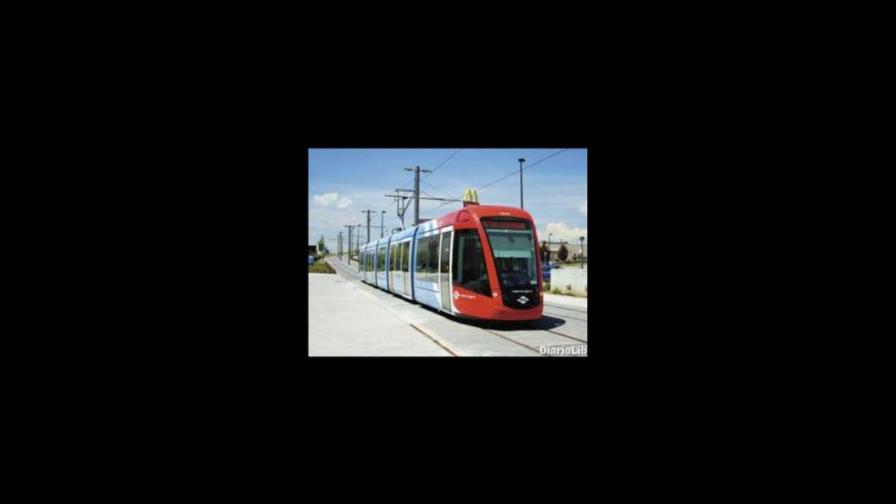
SANTO DOMINGO.- The first stage of the electric tramline that the municipal government of Santiago de los Caballeros is planning to build in order to better the movement of passengers and freight will have a cost of €200 million or around US$300 million.
Right now, the Ferrocarriles Metropolitanos de Vías Estrechas de España (FEVE) (Metropolitan Narrow Gauge Railways of Spain) is working on the final stages of the Project.
This information was offered by the director of Urban Planning for the local municipality, architect Oscar Nazer, who said that on 17 July the municipal council approved the permit for the use of the land for the construction of the system.
The permit was approved for the company "Ferrocarriles Metropolitanos de Santiago de los Caballeros" which is located in Madrid, and is the concessionaire of the project together with APD Consulting.
Nazer said that if everything works out like it has been planned, the construction of the new transport system would begin by the middle of next year.
The municipal official said that "We are optimistic about this initiative because it will resolve the issue of mass transit of passengers in the city of Santiago.
The first stage of the tramline along the East-West axis will cover the 21 kilometers that begin at the Cibao International Airport, following the Víctor Espaillat Mera Avenue, the Duarte Highway, and will go through a tunnel underneath the Monument to the Heroes of the Restoration. The line will continue along the Las Carreras Avenue, Imbert Avenue, and the South Beltway all the way to the roundabout in the sector called El Ingenio Arriba.
The West-East route will begin at the same roundabout, and follow the South Beltway to Santiago Rodríguez Street, then take Independencia Street up to the Monument, go through the tunnel, and back to the airport..
The new system will have two electricity sub-stations, one located at the El Ingenio Arriba end and another at the airport.
Both sub-stations will feed electricity to service the system.
The tramline is designed to operate on two schedules: One, from 6:00 a.m. to 7:00 p.m. will serve passengers, and the other, from 7:00 p.m. to 11:00 p.m. will haul freight.
The financial feasibility study is being carried out by a firm in Bilbao, Spain that was contracted by FEVE and the Dominican counter-part Consulting APD, the local promoter.
Both municipal executives as well as the executives of FEVE are trying to find international financing to complete the feasibility studies, estimated to cost US$2.0 million.
Santiago's mayor, José Enrique Sued, repeated his assertion that the project will not compromise the local or central government in any way because the project is being carried out as a concession with foreign investment.
The APD Consulting firm obtained the approval of the municipal council in May 2005 to carry out studies for the tramline.
The executives of FEVE are planning to visit the country next year to meet with officials of the Ministry of Public Works and the Office for the Reorganization of Transportation (OPRET) in order to formalize the paperwork for the concession and get the central government's approval of the project.
During a previous visit, the president of FEVE told reporters that the first studies indicated that the project was viable.
The tramline will have 12 stations along the route, one each 620 meters, according to reports.
The second stage will follow a North-South route that will cover 14 kilometers and go from Gurabo along the Bartolomé Colón Avenue, Estrella Sadhalá Avenue to the bridge at Arroyo Hondo on Yapur Dumit Avenue. From the bridge, buses will carry passengers to the university complex in La Barranquita.
However, the local driver's syndicates oppose the plan.
The president of the Transportation Federation of the Cibao, Miguel Sánchez, indicated that the union opposes the tramway because the transportation sector of Santiago was not consulted.
He said, "The tramline will affect 6,000 drivers along different routes and this will be very unfortunate and prejudicial for our sector. Nonetheless, he said that the driver's syndicates have been serving different routes for more than 40 years and that they will not be shoved aside by the tramway.
 Diario Libre

 Continuar con Google