


Security at Port Caucedo under "high risk profile"
 Diario Libre







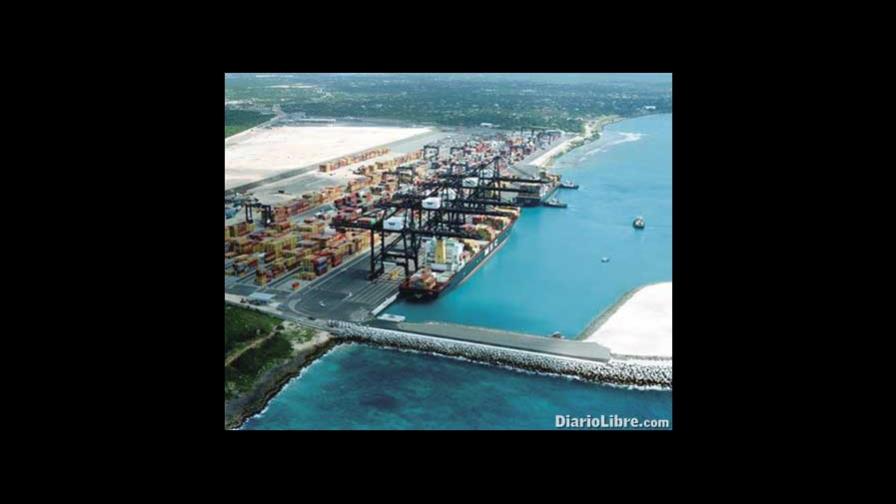
The frustrated attempts at contraband through the Multi-modal Port of Caucedo are many and varied. The authorities that have made public their worry due to the constant flow of these cases, have found on the dock illegal cargoes of everything from drugs, weapons, clothes and drinks, to the intrusive insects that hide in the wood and which could become a plague here.
One of the most serious problems is the drug shipments. From January to August of this year, the National Directorate for Drug Control (DNCD) seized in Caucedo 216.6 kilos of cocaine, of a total of 799.6 that was seized on the nation's docks. The greatest quantity of seizures during those eight months was done on the docks of Haina, with a total of 421.9 kilos, and the remaining 161.1 kilos were taken in Samana.
The number from Caucedo shows and increase in the seizures in relation to last year when the amount of cocaine seized in that port reached 81.3 kilos, in spite of the fact that the total amount of seizures on the docks was 1,520 kilos in 2010.
To all this you have to add the unimaginable tricks used to avoid paying duties. In order to detect and avoid contraband, the General Directorate of Customs (DGA) keeps up an inspection system of the cargoes based on the risk profile of the owner of the merchandise. That way, the thoroughness of the inspection that is done on the cargo that leaves or enters the port will depend on how well known is the owner of the shipment or the place where it came from, since more attention is given when it comes from South America.
The process
According to the customs collector in Caucedo, Dominican Abud Cruz, the inspection process for imports includes a four color ticketing process: green, red, orange and yellow. Green is placed on the cargo of those companies that have a low risk profile, to those that only have a documentary assessment done at the port and are released quickly, without a physical inspection. In this low-risk category there are perhaps between 30% and 40 % of the approximately 594 companies that might pass through the port in one day.
The orange color is used for the free zone companies, and like the previous ones, they do not have a physical inspection at the port, but rather at their destination, besides the documentary assessment.
"The yellow ones, is because this port is the only one that has x-rays for the containers and this system allows us to use it as a tool in order to pass all the cargo that we feel needs to be looked at. For example, those that come from the South: Venezuela, Colombia....always go through the CSI system ( Container Security Initiative) with which we can see exactly if the container has a double floor, if it might have hidden merchandise or if there are drugs or contraband," she explained.
Depending on the results of the x-rays, the authorities might order a physical inspection of the contents, and this calls for a red tape. This ticket is reserved for the lesser known importers, the new ones or who do not have a low risk profile, and this means that the cargo will be physically inspected. As in the former case, the cargo may go into the x-ray machine and depending on the results of the procedure it might be opened for a closer inspection, according to the explanation by Abud Cruz.
Once the merchandise is in the port, the documentary assessment lasts 24 hours, although the process of clearance and payment of duties could be finished in an hour. In the case of exports, the inspections are carried out at the point of origin. In order to do this, a group of personnel, composed of at least four agents carries out the inspection and the exporter decides when, after this to take the load to the docks.
Questioned about the possibility that someone might decide to alter the cargo after it has been inspected, the official said that this would be very difficult because everything is sealed. "And also everything goes through the machine (x-ray machine), and it is difficult to put in merchandise after, because it is all sealed up. But it goes through the machine anyway because there are countries that require it," she added.
She stressed, likewise, the monitoring and tracking of an export cargo, since personnel are assigned to watch it (some visible and some undercover) and there are at least four: one from the DNCD, one from J-2, one from the DNI and one from Customs.
But, in addition, these cargoes are also subject to random checks in the port, which implies that at any moment they might open the container independent of the fact that the shipper has a low risk profile. In case they find some irregularity in such a search, the company loses points and can have its profile changed.
The cases
The latest cases of contraband in the Port of Caucedo have to do with two drug seizures carried out by the DNCD. The first was of 34 kilos packed in 25 packages that were inside a package inside a container that was in transit and came from Los Angeles, California and headed to Belgium.
Another case came up last 29 August and consisted of 40 packages of cocaine, which, the same as the previous case was inside another package inside a container that was in transit and that arrived from Costa Rica.
One of the most notorious cases was the seizure last year in Spain of 1.200 kilos of cocaine from the Spanish businessman Arturo del Tiempo Marques, who managed to get it through the Caucedo docks. According to a report on the information from the CSI Program at Customs, since 2006 when the system began to be used, until January of this year, they had looked at 5006 containers. The inspections allowed them to detect a load of 2,582 kilos of cocaine that same year, another 1,115 kilos in 2009 and another 87 kilograms of the same drug in 2010.
The containers in transit have been a headache for the Customs director, Rafael Camilo, accord the what he, himself, has said. And according to Abud Cruz, this is due principally to the cargo that is going to Haiti and for which there is no proof that the same stuff will not return to the country once it is delivered on the frontier.
With respect to the different article, for example, in January of 2007 they found 43,200 tee shirts of different sizes, more than 50,000 labels for clothing by Polo Ralph Lauren. Besides this they have found firearms, which together with motorcycles are the most common articles of contraband according to Abud Cruz.
"The majority of the contraband that we find comes in the shipments of people's move back to the country or in tanks and they are weapons and motorcycles...but we have found every sort of thing, like money and so forth, and because of this we have recently change the inspection system for the tanks, which will be quite exhaustive and because of this a lot of cargo does not now want to come through here," she said.
More evasion in technology
Another issue which the DGA has to pay a lot of attention to in Caucedo is evasion, because this has various disguises. One of them and the most frequent is to declare one thing and import another, with the idea of altering the tariff classification.
"This happens a lot, like declaring a television set as a computer monitor, because the monitors do not pay. It is also common to alter the real value of the merchandise," says Abud Cruz.
And in order to counter the evasion of duties, besides the documentary appraisal, which verifies among other things that the merchandise declares is the same as the cargo, Customs has a flow of communication with its counterparts in other countries and even with suppliers in order to know exactly what an importer purchased. And to these measures they add that once they discover and evasion, the person responsible is punished by having to pay double the value of the tariff that corresponds to the merchandise, plus an additional 20%. The importer also loses points and could fall into a lower category on the risk assessment charts.
Abud Cruz said that due to the rigorous inspections, the importer now take more care and many also do not want to use the port for fear of being discovered, which can be seen in the fact that in July of this year, the customs declarations were fewer, although not the amount of money collected.
In July of last year, the customs declarations for consumer goods numbered 5,913, and this year for the same month there were 3,944. Nonetheless, the collections in DR pesos were RD$2,101,693,579.07 this year, and last year they were, for the same period, RD$2.002 billion.
One of the most serious problems is the drug shipments. From January to August of this year, the National Directorate for Drug Control (DNCD) seized in Caucedo 216.6 kilos of cocaine, of a total of 799.6 that was seized on the nation's docks. The greatest quantity of seizures during those eight months was done on the docks of Haina, with a total of 421.9 kilos, and the remaining 161.1 kilos were taken in Samana.
The number from Caucedo shows and increase in the seizures in relation to last year when the amount of cocaine seized in that port reached 81.3 kilos, in spite of the fact that the total amount of seizures on the docks was 1,520 kilos in 2010.
To all this you have to add the unimaginable tricks used to avoid paying duties. In order to detect and avoid contraband, the General Directorate of Customs (DGA) keeps up an inspection system of the cargoes based on the risk profile of the owner of the merchandise. That way, the thoroughness of the inspection that is done on the cargo that leaves or enters the port will depend on how well known is the owner of the shipment or the place where it came from, since more attention is given when it comes from South America.
The process
According to the customs collector in Caucedo, Dominican Abud Cruz, the inspection process for imports includes a four color ticketing process: green, red, orange and yellow. Green is placed on the cargo of those companies that have a low risk profile, to those that only have a documentary assessment done at the port and are released quickly, without a physical inspection. In this low-risk category there are perhaps between 30% and 40 % of the approximately 594 companies that might pass through the port in one day.
The orange color is used for the free zone companies, and like the previous ones, they do not have a physical inspection at the port, but rather at their destination, besides the documentary assessment.
"The yellow ones, is because this port is the only one that has x-rays for the containers and this system allows us to use it as a tool in order to pass all the cargo that we feel needs to be looked at. For example, those that come from the South: Venezuela, Colombia....always go through the CSI system ( Container Security Initiative) with which we can see exactly if the container has a double floor, if it might have hidden merchandise or if there are drugs or contraband," she explained.
Depending on the results of the x-rays, the authorities might order a physical inspection of the contents, and this calls for a red tape. This ticket is reserved for the lesser known importers, the new ones or who do not have a low risk profile, and this means that the cargo will be physically inspected. As in the former case, the cargo may go into the x-ray machine and depending on the results of the procedure it might be opened for a closer inspection, according to the explanation by Abud Cruz.
Once the merchandise is in the port, the documentary assessment lasts 24 hours, although the process of clearance and payment of duties could be finished in an hour. In the case of exports, the inspections are carried out at the point of origin. In order to do this, a group of personnel, composed of at least four agents carries out the inspection and the exporter decides when, after this to take the load to the docks.
Questioned about the possibility that someone might decide to alter the cargo after it has been inspected, the official said that this would be very difficult because everything is sealed. "And also everything goes through the machine (x-ray machine), and it is difficult to put in merchandise after, because it is all sealed up. But it goes through the machine anyway because there are countries that require it," she added.
She stressed, likewise, the monitoring and tracking of an export cargo, since personnel are assigned to watch it (some visible and some undercover) and there are at least four: one from the DNCD, one from J-2, one from the DNI and one from Customs.
But, in addition, these cargoes are also subject to random checks in the port, which implies that at any moment they might open the container independent of the fact that the shipper has a low risk profile. In case they find some irregularity in such a search, the company loses points and can have its profile changed.
The cases
The latest cases of contraband in the Port of Caucedo have to do with two drug seizures carried out by the DNCD. The first was of 34 kilos packed in 25 packages that were inside a package inside a container that was in transit and came from Los Angeles, California and headed to Belgium.
Another case came up last 29 August and consisted of 40 packages of cocaine, which, the same as the previous case was inside another package inside a container that was in transit and that arrived from Costa Rica.
One of the most notorious cases was the seizure last year in Spain of 1.200 kilos of cocaine from the Spanish businessman Arturo del Tiempo Marques, who managed to get it through the Caucedo docks. According to a report on the information from the CSI Program at Customs, since 2006 when the system began to be used, until January of this year, they had looked at 5006 containers. The inspections allowed them to detect a load of 2,582 kilos of cocaine that same year, another 1,115 kilos in 2009 and another 87 kilograms of the same drug in 2010.
The containers in transit have been a headache for the Customs director, Rafael Camilo, accord the what he, himself, has said. And according to Abud Cruz, this is due principally to the cargo that is going to Haiti and for which there is no proof that the same stuff will not return to the country once it is delivered on the frontier.
With respect to the different article, for example, in January of 2007 they found 43,200 tee shirts of different sizes, more than 50,000 labels for clothing by Polo Ralph Lauren. Besides this they have found firearms, which together with motorcycles are the most common articles of contraband according to Abud Cruz.
"The majority of the contraband that we find comes in the shipments of people's move back to the country or in tanks and they are weapons and motorcycles...but we have found every sort of thing, like money and so forth, and because of this we have recently change the inspection system for the tanks, which will be quite exhaustive and because of this a lot of cargo does not now want to come through here," she said.
More evasion in technology
Another issue which the DGA has to pay a lot of attention to in Caucedo is evasion, because this has various disguises. One of them and the most frequent is to declare one thing and import another, with the idea of altering the tariff classification.
"This happens a lot, like declaring a television set as a computer monitor, because the monitors do not pay. It is also common to alter the real value of the merchandise," says Abud Cruz.
And in order to counter the evasion of duties, besides the documentary appraisal, which verifies among other things that the merchandise declares is the same as the cargo, Customs has a flow of communication with its counterparts in other countries and even with suppliers in order to know exactly what an importer purchased. And to these measures they add that once they discover and evasion, the person responsible is punished by having to pay double the value of the tariff that corresponds to the merchandise, plus an additional 20%. The importer also loses points and could fall into a lower category on the risk assessment charts.
Abud Cruz said that due to the rigorous inspections, the importer now take more care and many also do not want to use the port for fear of being discovered, which can be seen in the fact that in July of this year, the customs declarations were fewer, although not the amount of money collected.
In July of last year, the customs declarations for consumer goods numbered 5,913, and this year for the same month there were 3,944. Nonetheless, the collections in DR pesos were RD$2,101,693,579.07 this year, and last year they were, for the same period, RD$2.002 billion.
 Diario Libre

 Continuar con Google