


United States prohibits Dominican fruits and vegetables to enter territory
Ministry of Agriculture says the measure is temporary and only affects several products
 Edwin Ruiz







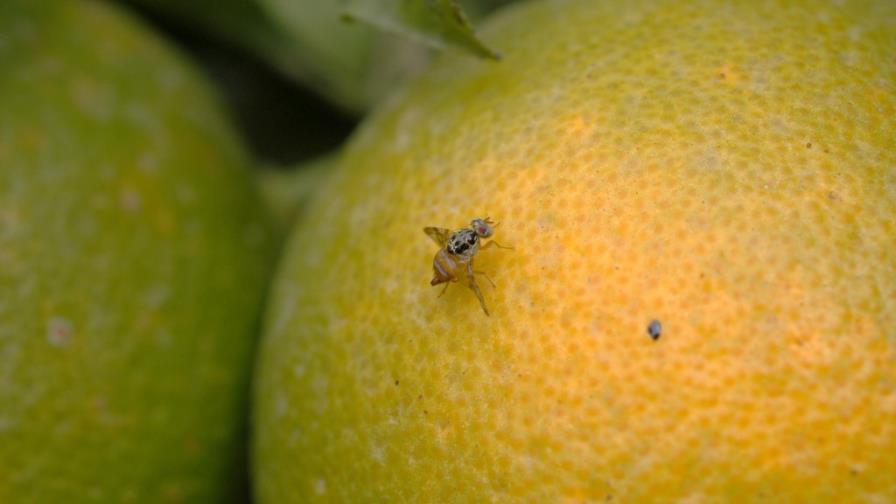
SD. The prohibition which the United States Department of Agriculture announced today, 18 March, for a group of fruits and vegetables from the Dominican Republic, threatens to have a strong and negative impact on local exports.
The measure affects some 18 products, among which are included avocados, sapotas, grapefruits, tangerines, sour oranges, papayas, tomatoes, bell peppers, lychee nuts, prickly pear fruit, longan (a cousin of th4 lychee) and mangoes.
These fruits, which correspond to some of the greenhouse production, are part of the "emerging stars" of the Dominican Republic, according to the latest report issued by the Dominican Observatory of International Commerce (ODCI), of the Technological Institute of Santo Domingo (Intec).
On 20 November 2014, economist Pavel Isa Contreras, an investigator of the ODCI, presented the report, "Profile of the fruit and vegetable exports." Among the findings, he stressed that between the years 2005 and 2013, fruits and vegetable exports have increased four times faster than the total exports, and since 2001 they have grown at an average rate of 18.6% a year.
In 2013, under the title of fruit and vegetable exports, the country received US $300 million. These exports face "overwhelming" competition from Mexico for the United States and European markets.
The agricultural authorities of the United States prohibited the entry into that country of this group of fruits and vegetables from the Dominican Republic in order to avoid the entry into United States territory of the Mediterranean fruit fly. They reported that this plague was detected in Punta Cana.
The United States Department of Agriculture, through its Animal and Plant Health Inspection Service (APHIS) placed the bulletin on its webpage, dated 18 March 2015, in which they reported on the prohibition which also includes the movement inside its territory of this merchandise.
In their bulletin, APHIS says that the introduction and establishment of the Mediterranean fruit fly in its territory, "represents a serious threat" for the agriculture of the United States.
Agriculture explains
The Minister of Agriculture, Angel Estevez, and the Agricultural Attaché of the United States Embassy, Morgan Perkins, reported that the prohibition of exports of certain farm products from the Dominican Republic to the United States of America, announced by the Animal and Plant Health Inspection Service (APHIS) is a temporary measure, and only affects a limited amount of products, which could be hosts of the quarantined plague, known as the Mediterranean fruit fly (Serattitis Capitata) or medfly, which was identified in an outbreak focused in a 22 km radius around the international airport at Punta Cana. The Minister reported that in spite of the fact that diverse products are prohibited, the country only exports four of them, which are: avocado, papaya, bell peppers and tomatoes. Likewise, he reported that today, Thursday, a team of technicians specialized in the handling and eradication of this plague will arrive from the United States. This joint effort is the result of work that the authorities from the United States Department of Agriculture and the APHIS have been carrying out to eradicate as soon as possible this localized outbreak.
The measure affects some 18 products, among which are included avocados, sapotas, grapefruits, tangerines, sour oranges, papayas, tomatoes, bell peppers, lychee nuts, prickly pear fruit, longan (a cousin of th4 lychee) and mangoes.
These fruits, which correspond to some of the greenhouse production, are part of the "emerging stars" of the Dominican Republic, according to the latest report issued by the Dominican Observatory of International Commerce (ODCI), of the Technological Institute of Santo Domingo (Intec).
On 20 November 2014, economist Pavel Isa Contreras, an investigator of the ODCI, presented the report, "Profile of the fruit and vegetable exports." Among the findings, he stressed that between the years 2005 and 2013, fruits and vegetable exports have increased four times faster than the total exports, and since 2001 they have grown at an average rate of 18.6% a year.
In 2013, under the title of fruit and vegetable exports, the country received US $300 million. These exports face "overwhelming" competition from Mexico for the United States and European markets.
The agricultural authorities of the United States prohibited the entry into that country of this group of fruits and vegetables from the Dominican Republic in order to avoid the entry into United States territory of the Mediterranean fruit fly. They reported that this plague was detected in Punta Cana.
The United States Department of Agriculture, through its Animal and Plant Health Inspection Service (APHIS) placed the bulletin on its webpage, dated 18 March 2015, in which they reported on the prohibition which also includes the movement inside its territory of this merchandise.
In their bulletin, APHIS says that the introduction and establishment of the Mediterranean fruit fly in its territory, "represents a serious threat" for the agriculture of the United States.
Agriculture explains
The Minister of Agriculture, Angel Estevez, and the Agricultural Attaché of the United States Embassy, Morgan Perkins, reported that the prohibition of exports of certain farm products from the Dominican Republic to the United States of America, announced by the Animal and Plant Health Inspection Service (APHIS) is a temporary measure, and only affects a limited amount of products, which could be hosts of the quarantined plague, known as the Mediterranean fruit fly (Serattitis Capitata) or medfly, which was identified in an outbreak focused in a 22 km radius around the international airport at Punta Cana. The Minister reported that in spite of the fact that diverse products are prohibited, the country only exports four of them, which are: avocado, papaya, bell peppers and tomatoes. Likewise, he reported that today, Thursday, a team of technicians specialized in the handling and eradication of this plague will arrive from the United States. This joint effort is the result of work that the authorities from the United States Department of Agriculture and the APHIS have been carrying out to eradicate as soon as possible this localized outbreak.
 Edwin Ruiz

 Continuar con Google